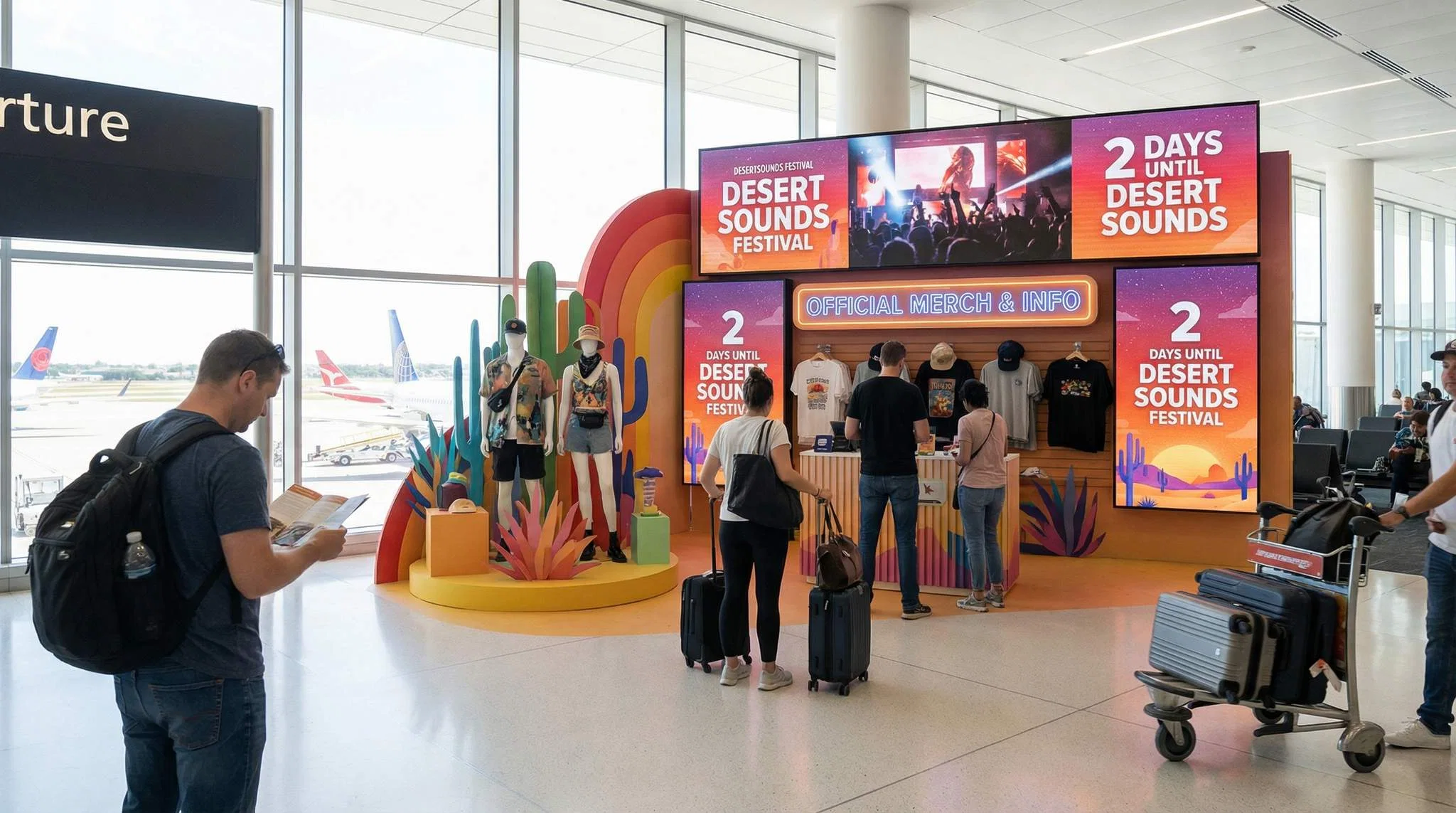
The planning question for a pop-up is not which hall to book but how quickly the footprint can go up and come back down, since most pop-ups run on a fraction of the move-in time a full trade show gets.
Pop-Up Event Services execution priorities
- A build and strike timeline measured in hours, not days
- A footprint small enough to qualify as self-handled rather than contracted freight
- A location choice between Short North storefronts and downtown event-adjacent spots
Short North storefronts and sidewalks fit the pop-up timeline
The Short North Arts District's mix of storefronts, galleries, and sidewalk frontage along High Street gives pop-up organizers a location with existing foot traffic and short-term lease or vendor-day options, which suits an event that only needs to exist for a day or a weekend.
Because these spots are not convention-center floor space, the approval path runs through the property owner or district association rather than a venue exhibitor desk, and any structure that goes beyond simple tables and banner stands may still need a city permit.
Self-handled builds keep the timeline realistic
A pop-up that stays within a small, self-handled footprint, using folding tables, banner stands, and hand-carried product rather than crated freight, can typically be built and struck by a small crew without booking a general service contractor, which is part of what makes the format work on a short timeline.
The moment a pop-up grows to include a raised platform, generator power, or anything requiring rigging, it starts to look more like a small activation than a true pop-up, and the timeline and permitting expectations should shift accordingly.
- Keep the build within hand-carried, self-handled limits
- Reassess the timeline if rigging or generator power gets added
- Confirm strike time against the property's own closing hours
Piggybacking on a larger downtown event changes the access rules
Some Columbus pop-ups attach themselves to a larger downtown event, such as a festival weekend or a scheduled GCCC show, to borrow foot traffic without booking their own full event footprint, but that approach means working within whatever access and vendor rules the host event already has in place rather than setting independent terms.
This piggyback model can work well for a single day, but it depends entirely on getting explicit permission from whoever controls the host event's footprint, since simply setting up nearby without coordination risks conflict with official vendors or the host event's own permit.
- Get explicit permission before piggybacking on a host event's footprint
- Follow the host event's vendor and access rules rather than independent terms
- Confirm whether the host event's permit already covers the pop-up's location
Product and cash handling need a simple, honest plan
A pop-up selling product or taking payment on the spot needs a straightforward plan for cash or card handling and secure product storage overnight if the pop-up spans more than a single day, since a storefront or sidewalk spot may not have the same secure storage a leased convention booth would.
This is a small detail that gets overlooked precisely because pop-ups are planned quickly, but a missing overnight storage plan for product or a cash box left unsecured is a common and avoidable risk for this format specifically.
- Plan secure overnight storage if the pop-up spans more than one day
- Confirm card-reader connectivity at the specific storefront or sidewalk location
- Do not leave cash or product unsecured between shifts
Questions about Pop-Up Event Services
Can a Short North pop-up skip city permitting entirely?
A simple table-and-banner setup on private storefront property may not need one, but anything on public sidewalk or involving a larger structure typically does, so this should be confirmed with the district or city rather than assumed.
When does a pop-up stop qualifying as self-handled?
Once it adds rigging, generator power, or a raised platform, at which point it behaves more like a small activation and should be scoped with a venue or licensed contractor.
Is it acceptable to set up a pop-up near a larger event without asking first?
No, since doing so risks conflict with the host event's official vendors or its own city permit; explicit permission from whoever controls that footprint should come first.
How much move-in time does a typical Columbus pop-up need?
Often just a few hours, since the format is designed around hand-carried materials and a small crew rather than crated freight and a scheduled dock window.
What is an overlooked risk specific to pop-up events?
Unsecured product or cash left between shifts, since a storefront or sidewalk spot often lacks the secure overnight storage a leased convention booth would have.