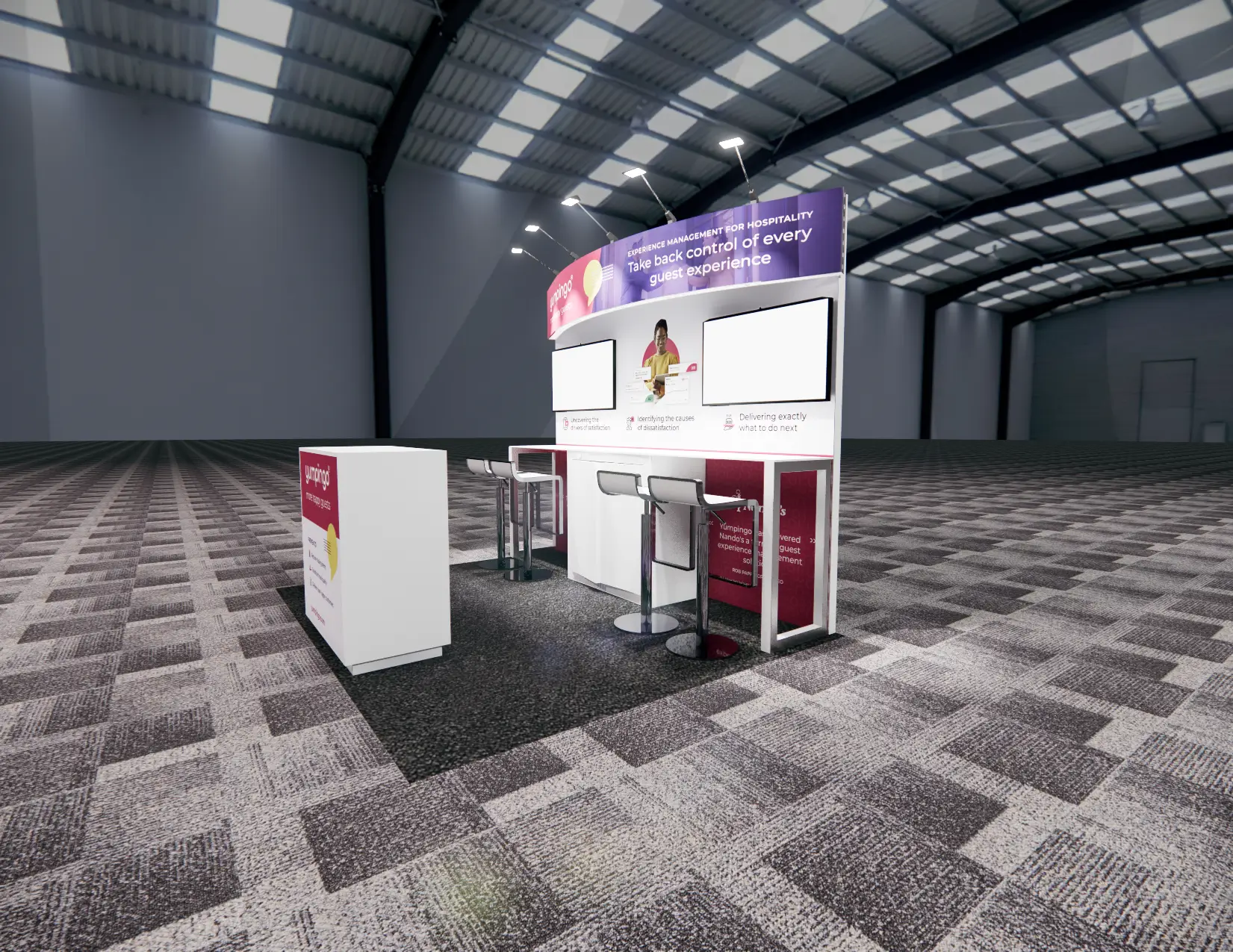
A turnkey program is only as strong as its weakest handoff between design, freight, labor, and on-site supervision, and each of those handoffs looks different depending on which Columbus venue is hosting the show.
Coordinating all of it under one plan means understanding what changes building to building rather than assuming a single process for the whole city.
Turnkey Trade Show Services execution priorities
- Booth or ballroom design matched to the specific hall's column spacing and rigging limits
- Labor and drayage scoped against each venue's own self-handled allowances
- Scheduling that accounts for the Ohio State Fair's hold on Ohio Expo Center availability
Design and fabrication across venue types
A turnkey scope typically starts with booth or environment design, which has to be checked against whichever hall or ballroom the program is actually using, since the Greater Columbus Convention Center's exhibit halls, Battelle Grand, and an arena-style building like Celeste Center at the Ohio Expo Center each carry different clear heights and column conditions.
Fabrication decisions made early, before the specific venue's dimensions are confirmed, are the most common source of last-minute rework in a turnkey program.
A turnkey program that folds in an off-site stop at a venue like COSI or the Franklin Park Conservatory needs that stop treated as its own mini-engagement within the larger scope, with separate design, labor, and scheduling confirmations rather than an extension of the main convention center or fairgrounds plan.
Freight, drayage, and labor under one plan
Because the convention center documents self-handled allowances while other Columbus venues may not, a turnkey program has to build its freight and labor plan around the specific rules of whatever venue is hosting that date rather than a single labor assumption for the whole engagement.
This is where a turnkey provider's coordination role matters most, since exhibitors rarely track venue-by-venue labor differences themselves.
AV, supervision, and connected hotel coordination
A full turnkey scope usually includes AV production, on-site supervision, and coordination with any connected hotel space used for hospitality or breakout sessions, and each of those pieces has its own schedule that a turnkey plan has to hold together rather than treat as automatically aligned.
The covered walkways linking the convention center to the Hilton Columbus Downtown and the Hyatt Regency Columbus make physical coordination possible, but the hotel's own event team still runs an independent booking schedule that has to be reconciled.
- Confirm design dimensions against the specific hall before fabrication begins
- Scope labor and drayage per venue rather than per program
- Reconcile AV, supervision, and any connected hotel schedule into one master timeline
Scheduling around the Columbus show calendar
The Ohio Expo Center's annual Ohio State Fair occupies most of that campus for several weeks each summer, and a turnkey program with a fairgrounds date needs that window confirmed early, since it directly limits when buildings like the Bricker Building or Cardinal Hall are actually available.
Downtown, the convention center's own calendar of anchor events plays a similar role in determining dock access and hall availability, so both calendars deserve equal attention in a turnkey plan rather than treating one as more predictable than the other.
Questions about Turnkey Trade Show Services
Does a turnkey program work the same at every Columbus venue?
No, design, labor, and scheduling all need to be adjusted per venue, since the convention center, Battelle Grand, and the Ohio Expo Center each carry different rules and dimensions.
How does turnkey labor scoping handle self-handled allowances?
It builds the labor plan around the specific venue's documented rules rather than a single assumption for the whole program, since not every Columbus venue offers the same allowances.
Does a turnkey scope include coordination with connected hotels?
Often yes, for hospitality or breakout space at the Hilton Columbus Downtown or Hyatt Regency Columbus, though that hotel's schedule still has to be reconciled separately from the venue's own timeline.
Why does the Ohio State Fair matter for turnkey scheduling?
It occupies most of the Ohio Expo Center campus for several weeks each summer, which limits building availability for any fairgrounds date on the calendar.
What is the biggest coordination risk in a turnkey program?
Treating design, labor, and scheduling decisions as consistent across every venue instead of confirming each one against that specific hall's documentation.
Does turnkey coordination change for an off-site stop like COSI?
Yes, an off-site stop at a venue like COSI or the Franklin Park Conservatory should be treated as its own mini-engagement within the larger turnkey scope, with separate design, labor, and scheduling confirmations.