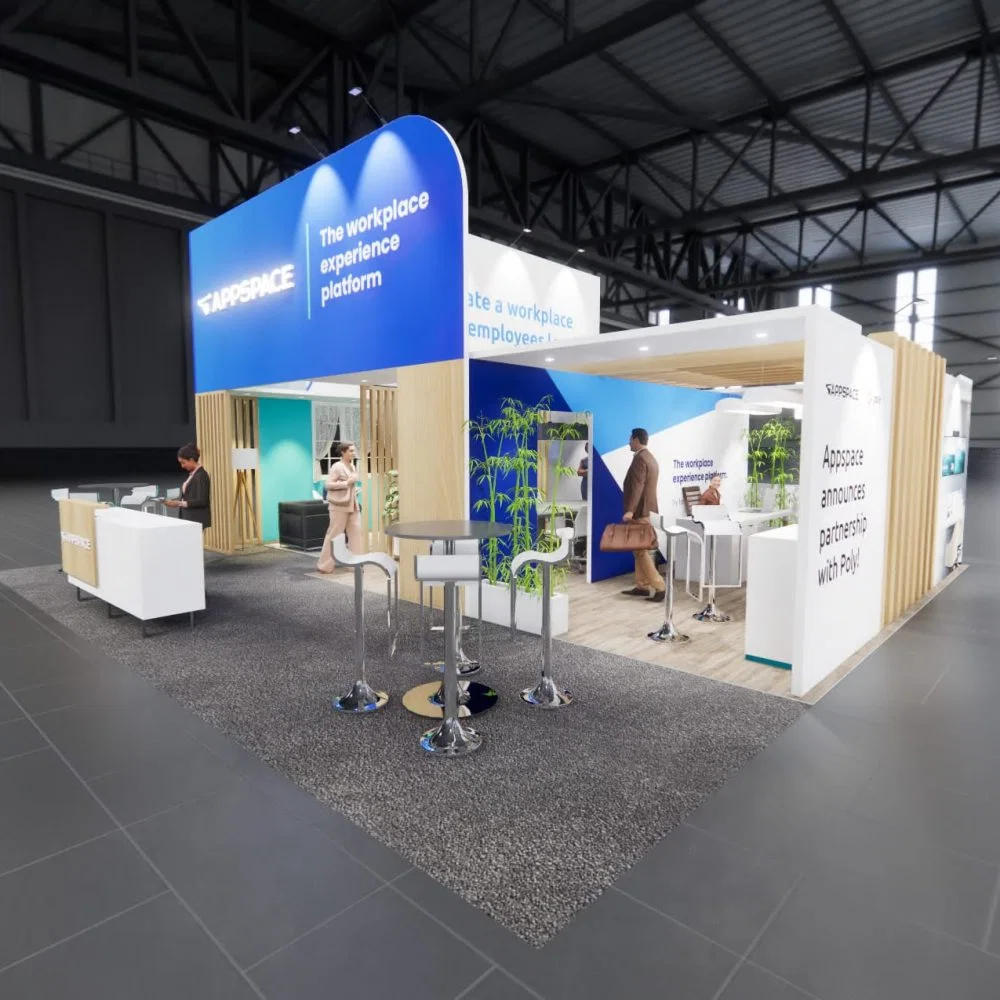
A general contractor's scope on a Columbus show usually covers drayage, aisle carpet, signage, and booth-package rentals, but how much of that scope is required, versus optional because an exhibitor is self-handling, depends on the specific venue's own rules.
Getting that scope right upfront avoids double-billing exhibitors for services they never intended to use.
Trade Show General Contracting execution priorities
- Material handling and drayage from the dock or drive-in door to the booth space
- Aisle carpet, signage, and booth-package rentals for the specific hall
- Coordinating with venue-documented self-handled allowances rather than assuming full drayage for every exhibitor
Drayage at the Greater Columbus Convention Center
Because the convention center publishes itself as a non-union, right-to-work building with documented self-handled allowances, a general contractor working there has to reconcile its own drayage scope with exhibitors who are legitimately moving their own freight under those allowances.
That reconciliation is a scheduling and billing question as much as a labor question, since a dock queue with both self-handled exhibitors and contracted drayage moving at the same time needs a clear order of operations.
When a program adds an off-site stop at a venue like the Franklin Park Conservatory or COSI, the general contractor's scope usually shrinks to signage and small rental furniture rather than full drayage, since those venues are not designed for large freight movement the way an exhibit hall or fairgrounds building is.
General contracting at Ohio Expo Center buildings
At a fairgrounds building like the Bricker Building or Cardinal Hall, drive-in doors close to the floor can shrink the material-handling distance considerably, which changes the drayage pricing conversation because less labor time is needed to move the same freight from door to booth.
The general contractor's aisle carpet and signage scope stays largely the same regardless of venue, since those services depend on show footprint rather than dock configuration.
Coordinating with connected hotel space downtown
When a program uses a connected hotel like the Hilton Columbus Downtown or the Hyatt Regency Columbus for breakout sessions or hospitality, the general contractor's scope sometimes extends into that hotel space for signage or small rental furniture, which requires separate coordination with the hotel's own event services team.
That coordination is not automatic just because the buildings are physically connected by walkway, since each property manages its own event logistics independently.
- Confirm which drayage services exhibitors actually need versus what is billed by default
- Coordinate signage and rental scope separately with any connected hotel's event team
- Match aisle carpet and booth-package orders to the specific hall's footprint
Scheduling drayage around the Columbus show calendar
Because the Ohio Expo Center hosts the Ohio State Fair for several weeks each summer, a general contractor scheduling fairgrounds drayage crews should confirm building availability against that calendar before committing crew time, since assumed year-round access to the campus is not accurate.
Downtown, the convention center's own calendar of anchor events plays a similar role in determining when dock access is shared with another show versus dedicated to one program.
General contracting invoices for a Columbus program should itemize drayage, aisle carpet, and any connected hotel scope separately by venue, since a single combined invoice across a downtown date and an Ohio Expo Center date makes it harder to catch a billing error tied to one specific stop.
Questions about Trade Show General Contracting
Does every exhibitor need drayage services at the convention center?
No, the venue documents self-handled allowances for exhibitors who choose to move their own freight, so general contracting scope should reconcile with that rather than assume full drayage for everyone.
How does drayage differ at Ohio Expo Center buildings?
Drive-in doors close to the floor can shorten the material-handling distance and change drayage pricing compared to a downtown dock queue.
Can a general contractor's scope extend into a connected hotel?
Sometimes, for signage or rental furniture in hotel breakout space, but that requires separate coordination with the hotel's own event services team.
Why does the Ohio State Fair matter for contracting schedules?
It occupies most of the Ohio Expo Center campus for several weeks each summer, which limits building availability for contracting crews during that window.
What is the most common billing issue in Columbus general contracting?
Billing full drayage services to exhibitors who are legitimately self-handling their own freight under the venue's documented allowances.
Does general contracting scope shrink for an off-site stop?
Often yes. A stop at a venue like the Franklin Park Conservatory or COSI typically needs signage and small rental furniture rather than full drayage, since those venues are not built for large freight movement.