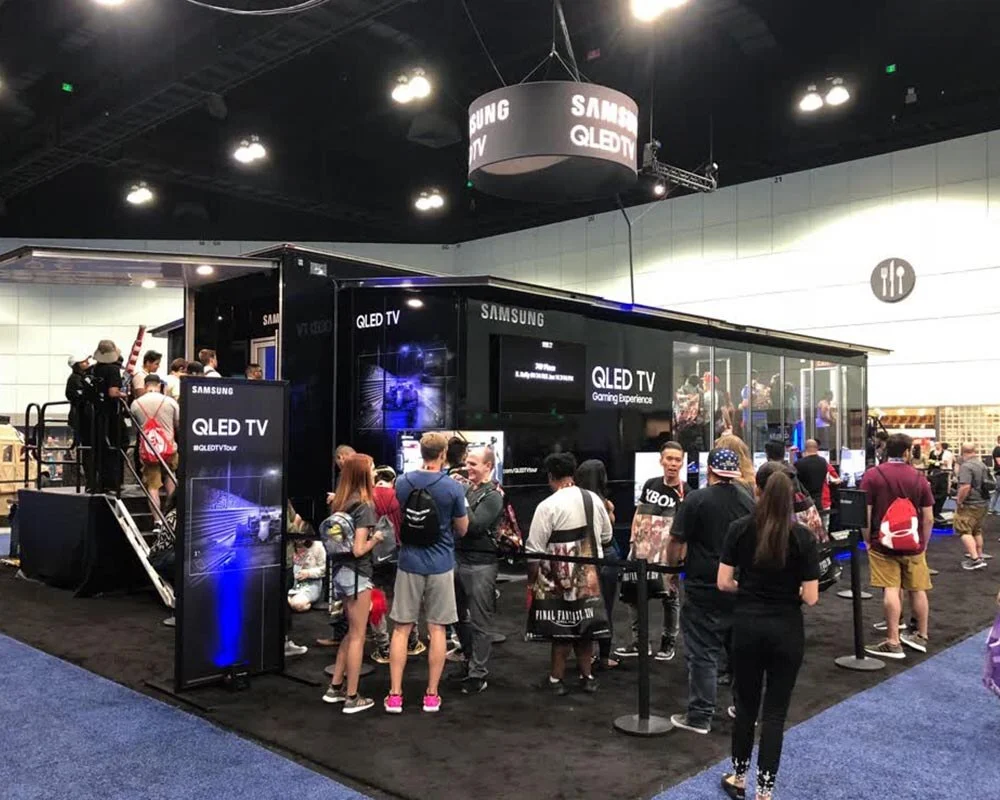
A roadshow stop usually arrives with its content, branding, and run-of-show already fixed from earlier stops, which means the Columbus-specific work is mostly about matching that fixed kit to local dock access, room dimensions, and labor rules rather than designing the event from scratch.
Roadshow Services execution priorities
- Matching a standardized touring kit to local dock and room dimensions
- Confirming Columbus labor rules against whatever the tour assumed elsewhere
- Scheduling a short, fixed load-in and load-out around the tour's overall calendar
A fixed kit still needs a local fit check
A touring kit built to fit a hotel ballroom in one city does not automatically fit Battelle Grand or a GCCC hall the same way, so the advance team should confirm ceiling height, door widths, and floor load against the specific Columbus room rather than assuming the kit that worked in the last city will work here.
This fit check matters most for anything with a fixed rig height or a wide load-in path, since a kit designed around a loading dock in one market may not translate directly to a downtown dock or a fairgrounds drive-in building.
Local labor rules should never be assumed from the last stop
GCCC operates as a non-union, right-to-work building with published self-handled allowances, which can be a meaningfully different labor environment than a union-heavy market the tour may have just left, such as Chicago or Las Vegas. Assuming the same labor rules apply in Columbus as the last stop is one of the more common roadshow planning mistakes.
Even where self-handling is allowed for smaller crates, a touring show with a large volume of cases may still benefit from local labor for speed, so the decision should weigh crew size and turnaround time against what is actually required rather than what was required elsewhere.
- Confirm Columbus labor rules fresh for each stop, not from the previous city
- Weigh self-handled options against turnaround time for large case counts
- Check whether the specific venue booked for this stop matches GCCC's rules or a different local venue's rules
A short load-in window drives the whole local schedule
Because a roadshow stop typically has a fixed date on a larger tour calendar, the Columbus load-in and load-out window is usually shorter than a locally built show would get, which puts pressure on advance coordination: dock time, labor booking, and any local vendor additions need to be locked well before the truck arrives.
Any local addition to the standardized kit, such as a market-specific banner or a regional sponsor element, should be finalized early enough that it does not become the item holding up an otherwise tight, well-rehearsed load-in.
- Lock dock time and local labor bookings well ahead of the tour truck's arrival
- Finalize any market-specific additions before they can delay a tight load-in
- Treat the Columbus stop's schedule as fixed by the tour calendar, not flexible
Local vendor backup matters more than it does for a locally built show
Because a touring crew is unfamiliar with Columbus, having a local backup contact for last-minute needs, such as replacement cabling, extra labor, or a forgotten rental item, matters more for a roadshow stop than for a show planned entirely by a local team already familiar with the market.
Identifying that local backup contact before the tour truck arrives, rather than searching for one once a problem appears mid-load-in, keeps a single missing item from threatening a schedule that the rest of the tour depends on.
- Identify a local backup vendor contact before the tour truck arrives
- Do not wait until a problem appears mid-load-in to search for local help
- Treat local backup support as part of advance planning, not a contingency afterthought
Questions about Roadshow Services
Does a touring kit that fit a hotel ballroom elsewhere automatically fit Battelle Grand?
Not automatically. Ceiling height, door widths, and floor load should be checked against the specific Columbus room before assuming a kit built for another city's ballroom will fit.
Are Columbus labor rules the same as a union-heavy tour stop like Chicago or Las Vegas?
No. GCCC operates as a non-union, right-to-work building with its own published self-handled allowances, so labor rules should be confirmed fresh for the Columbus stop rather than carried over from a different market.
How much load-in time does a typical roadshow stop get in Columbus?
Usually a shorter window than a locally built show, since the tour's overall calendar fixes the date, which means dock time and labor bookings need to be locked well ahead of the truck's arrival.
Can local sponsor additions be added at the last minute?
They can be added, but they should be finalized early enough that they do not delay an otherwise tight, well-rehearsed load-in that the rest of the tour depends on running on schedule.
Is a local backup vendor contact necessary if the touring kit is self-sufficient?
It is still worth identifying one in advance, since even a well-rehearsed kit can need a replacement cable, extra labor, or a forgotten rental item on short notice in an unfamiliar city.