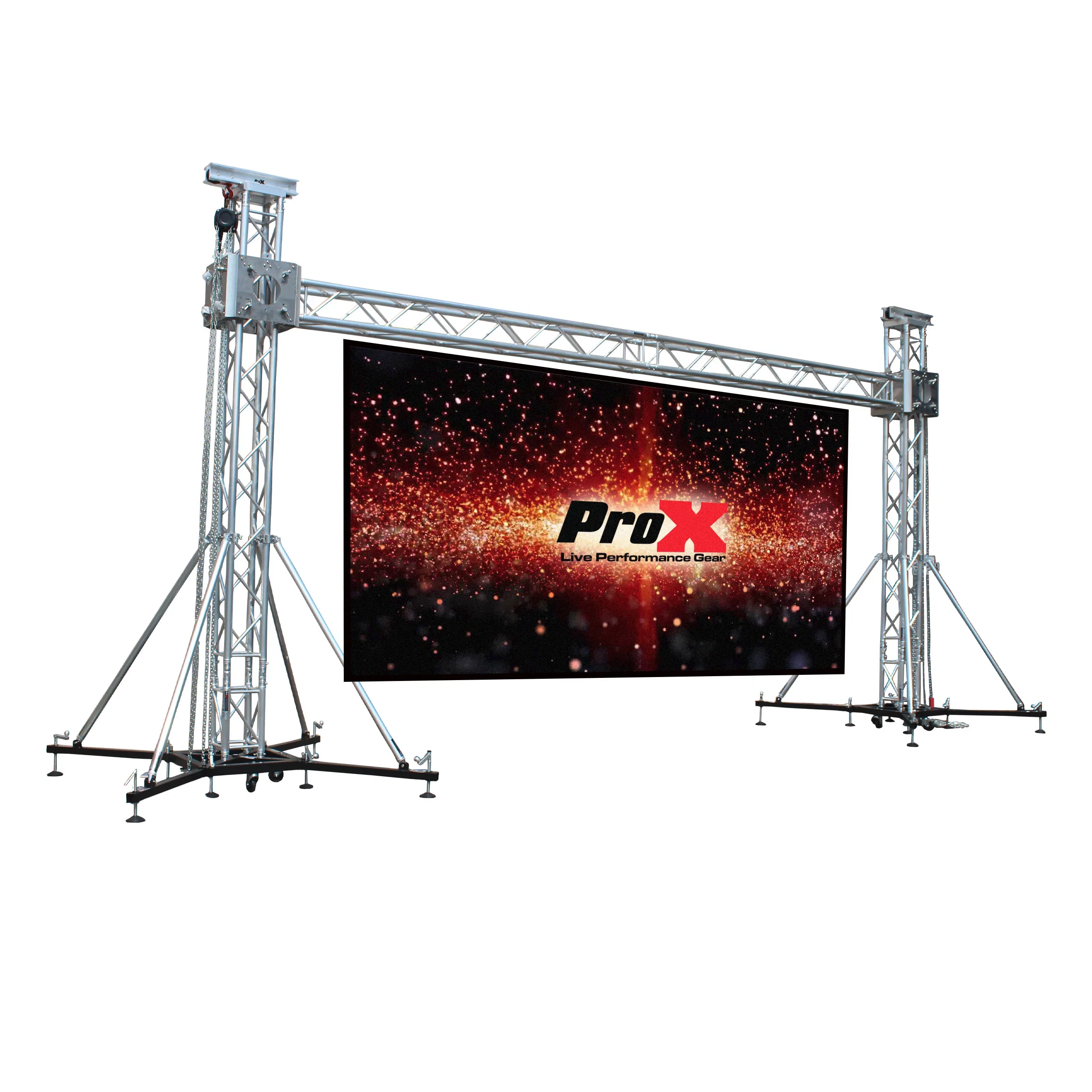
Sound, lighting, and video production plans built on assumed rigging capacity are the most common source of last-minute AV scrambles, since every Columbus venue documents its own load points and clear height rather than following one citywide standard.
Getting the room's actual specifications before designing the show, rather than after, is what separates a smooth trade show AV production from a stressful one.
Trade Show AV Production execution priorities
- Rigging load points and clear height for the specific hall, ballroom, or arena being used
- Power drop locations relative to the stage or booth footprint
- Whether the room is a finished indoor space or an arena floor with different acoustic behavior
Exhibit hall AV versus Battelle Grand session AV
The convention center's exhibit halls are typically built for flexible booth-level AV, meaning smaller truss runs, localized sound, and power distributed across a wide floor rather than concentrated on one stage.
Battelle Grand, used for general sessions and staged programs, follows a defined front-of-room orientation, which supports a more traditional single-stage rig with house sound and lighting positions already documented by the venue.
A smaller breakout or press session held at a connected hotel meeting room instead of Battelle Grand usually runs on that hotel's own house AV package rather than the convention center's system, so the production plan should confirm which system is actually in use before assuming a single AV vendor covers the whole program.
Arena acoustics at Celeste Center
An arena-style building like Celeste Center at the Ohio Expo Center behaves acoustically different from a carpeted convention center hall, since hard surfaces and open volume can create more reflection and reverberation that a sound design has to compensate for.
Trade show AV production at Celeste Center or a similar Ohio Expo Center building should plan speaker placement and coverage around that acoustic reality rather than reusing a sound plan built for a softer, more contained downtown room.
Power and cable runs across connected downtown space
Because the Greater Columbus Convention Center connects to the Hilton Columbus Downtown and the Hyatt Regency Columbus by covered walkway, some programs run overflow video or audio feeds into a connected hotel meeting room, which requires confirming cable-run distance and power capacity between buildings ahead of time.
That kind of cross-building feed is not something an Ohio Expo Center date can replicate the same way, since its buildings sit farther apart and are not connected by an indoor walkway.
- Confirm cable-run distance and signal loss for any cross-building feed
- Confirm house power capacity before adding significant additional load
- Test sound coverage on-site rather than relying on a generic room diagram
Load-in timing for AV crews
AV load-in usually needs to happen ahead of general exhibitor move-in so trussing and cable runs are clear of the floor before freight starts arriving, which means confirming the venue's specific AV load-in window rather than assuming it matches the general move-in schedule.
At the Ohio Expo Center, a drive-in door close to the stage area can speed up truss and rigging equipment delivery compared to a downtown dock queue shared with general exhibitor freight.
Questions about Trade Show AV Production
Do all Columbus venues share the same rigging limits?
No. Exhibit halls, Battelle Grand, and an arena-style building like Celeste Center each document their own clear height and load points, which should be confirmed per room.
Why does Celeste Center need a different sound plan?
Its arena surfaces and open volume behave acoustically different from a carpeted convention center hall, which changes speaker placement and coverage decisions.
Can AV feeds run between the convention center and a connected hotel?
Some programs do this using the covered walkway connections to the Hilton Columbus Downtown or Hyatt Regency Columbus, but cable-run distance and power should be confirmed first.
When should AV crews load in relative to general move-in?
Usually ahead of general exhibitor freight so trussing and cable runs are clear of the floor, based on the venue's specific documented AV load-in window.
Is fairgrounds AV load-in faster than downtown?
It can be, since a drive-in door near the stage area may speed up truss delivery compared to a shared downtown dock queue, though this varies by building.
Does a hotel breakout session use the same AV system as Battelle Grand?
Not necessarily. A breakout room at a connected hotel typically runs on that property's own house AV package, so the production plan should confirm which system applies rather than assuming one vendor covers every room.