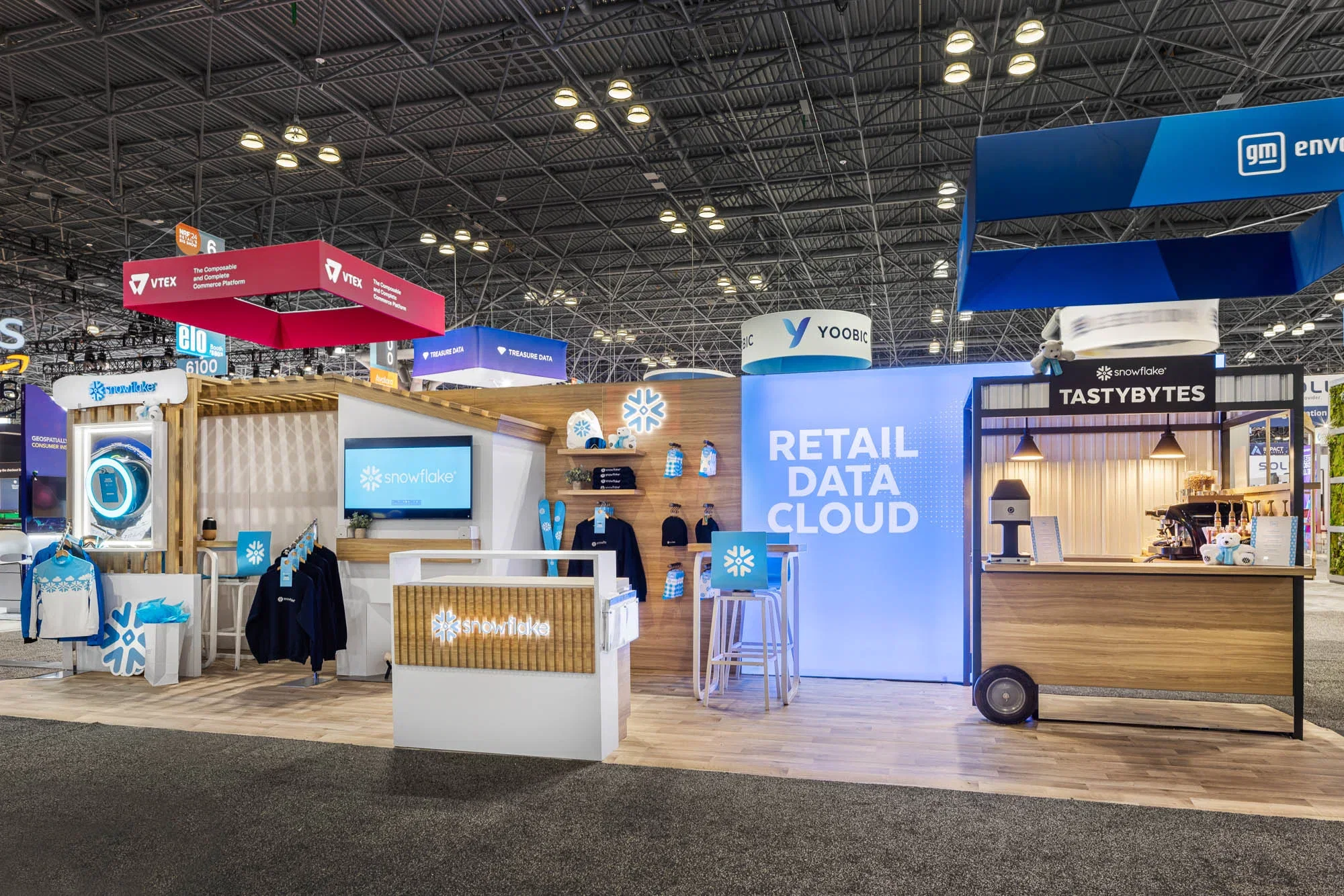
Most exhibitors at a Greater Columbus Convention Center show are working from a single line of frontage, not a corner or island, so an inline booth display has to be planned around aisle width, neighboring booth height limits, and how quickly a full row can be built and struck.
This page covers what actually changes for inline work in Columbus rather than repeating generic booth-display copy.
Inline Booth Displays execution priorities
- Confirm the show's back-wall height limit before ordering an inline booth display taller than standard drape
- Sequence a full row of inline booth displays so neighboring exhibitors aren't waiting on each other's freight
- Check aisle width against any inline booth display elements that extend past the counter line
- Plan for quick strike, since inline rows are usually the first sections broken down after the show
Aisle standards shape what an inline booth display can do
The Greater Columbus Convention Center's exhibit halls are laid out with standard aisle widths that most show organizers keep consistent hall to hall, and an inline booth display built to the eight-foot back-wall, four-foot side-rail convention keeps sightlines open for the whole row.
Exhibitors who bring taller graphics or hanging elements into an inline booth display without checking the show's specific back-wall variance often get flagged during the exhibitor service walk, which is avoidable by confirming the limit in the exhibitor manual first.
Where inline rows sit on the Columbus show floor
Downtown at the Greater Columbus Convention Center, inline booth displays typically fill the perimeter and interior rows around larger island bookings, while at the Ohio Expo Center and State Fairgrounds the same inline format often runs the length of buildings like the Bricker Building where drive-in doors sit at either end.
That layout difference changes how far freight has to travel from the dock or drive-in door to a given inline booth display, which affects how the move-in schedule should be sequenced.
- Greater Columbus Convention Center: perimeter and interior inline rows around island space
- Ohio Expo Center and State Fairgrounds: long inline runs fed from drive-in doors
- Battelle Grand: rarely used for inline exhibit rows, mostly general session seating
Move-in and move-out pressure on inline booth displays
Because an inline booth display is smaller and faster to build than an island or peninsula, show organizers in Columbus often schedule inline exhibitors later in the move-in window and earlier in move-out, which can compress the time available if freight is delayed.
Confirming the exact time slot for an inline booth display's row, rather than assuming a general move-in window, keeps a small booth from getting squeezed by larger neighbors building at the same time.
- Confirm the specific move-in slot assigned to the row
- Have carpet and drape confirmed before freight arrives
- Plan strike timing around move-out for the whole row rather than one booth alone
Shared services along a full inline row
Carpet, electrical, and drape for a run of inline booth displays are often ordered against the same aisle, and a change to one exhibitor's inline booth display, like adding a wider back-wall panel, can affect the drape run for the whole row rather than staying contained to one booth.
Checking in with the show organizer before altering a standard inline booth display's footprint avoids a conflict with neighboring exhibitors who ordered against the original floor plan.
Questions about Inline Booth Displays
What is the standard height limit for inline booth displays downtown?
Most Greater Columbus Convention Center shows follow an eight-foot back-wall and four-foot side-rail convention for inline booth displays, though the exact limit is set by the show organizer and should be confirmed in that show's exhibitor manual.
Do inline booth displays get built differently at the Ohio Expo Center?
The format is the same, but inline rows there often run the length of a building fed by drive-in doors rather than a loading dock, which changes how far freight travels to reach a given booth.
When should an inline booth display expect to move in?
Inline booths are frequently scheduled after larger island and peninsula builds have started, so confirming the specific time slot for the row avoids arriving before the aisle is ready.
Can an inline booth display include hanging graphics in Columbus?
Only if the show's back-wall height allows it and rigging has been cleared for that location; hanging elements on an inline booth display are less common than on islands and should be confirmed with the show organizer first.
Can an inline booth display be upgraded to a corner or end-cap position later?
Sometimes, if the show organizer has an available end-cap or corner spot, but that change affects the booth's height allowance and neighboring sightlines, so an inline booth display moving to a corner position should be reconfirmed against that position's specific rules.