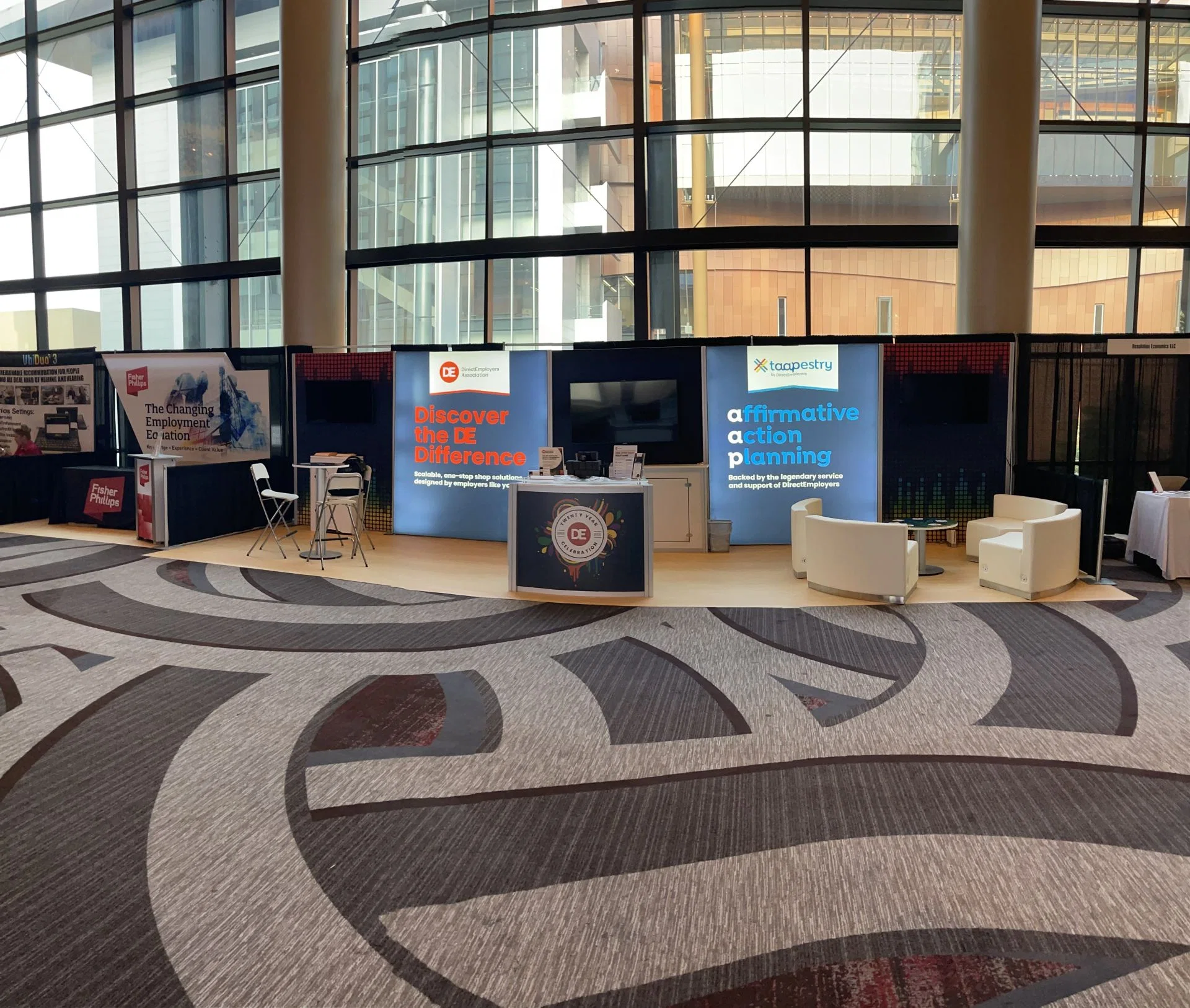
Most Columbus associations split their annual meeting across two footprints: a downtown hotel block for committee and board work, and either a GCCC hall or a hotel ballroom for the general session and any tabletop exhibit component.
Association Meeting Services execution priorities
- Which building holds the general session versus the committee and board rooms
- Whether badge pickup happens at the hotel, at GCCC registration, or both
- How the skywalk connection between GCCC and the Hyatt Regency affects attendee flow
A membership meeting is not the same build as a trade show
An association's annual meeting follows a governance calendar rather than a show floor lease, so the working document is the meeting agenda and room block rather than an exhibitor manual. That still matters at GCCC because even a modest tabletop sponsor area inside a ballroom or prefunction space falls under the venue's own rules for signage, power drops, and hanging materials.
Because the Hyatt Regency Columbus is connected to GCCC by a covered walkway, associations that split sessions between the hotel and the convention center can move attendees without a shuttle, which simplifies badge checks but still requires coordination on which entrance controls access at which hour.
Board, committee, and general session logistics differ by room type
Board and committee meetings tend to run in smaller hotel meeting rooms with fixed seating and minimal AV, while the general session usually needs a larger room with staging, screens, and house sound, which points toward Battelle Grand or a GCCC hall depending on headcount.
Associations that add a small sponsor or exhibitor component to the general session should confirm early whether that footprint sits inside the ballroom itself or in an adjoining prefunction area, since the two have different fire-code and traffic-flow rules.
- Confirm room capacities against actual headcount, not last year's estimate
- Separate the board/committee schedule from the general session build schedule
- Ask whether prefunction sponsor tables need their own power and signage approval
Move-in timing follows the agenda, not a freight deadline
Unlike a full trade show, an association meeting rarely has a hard freight cutoff; instead, the constraint is usually the room turnover between the last committee meeting and the first general session rehearsal. That turnover window is where signage, staging, and any sponsor tabletop pieces need to be in place.
Because GCCC operates under a right-to-work framework rather than a blanket union requirement, small self-handled items such as banner stands or a few tabletop crates can often move in without a full material-handling order, though larger staging or rigged AV should still be confirmed against the current exhibitor or event planning packet.
- Ask the venue directly whether self-handling applies to your footprint size
- Build the AV and staging schedule around the room-turnover window
- Keep a printed copy of the current event planning packet on-site
Sponsor and partner recognition needs its own line item
Many association meetings carry sponsor recognition obligations, such as signage, verbal acknowledgment during the general session, or a reserved table, and these commitments should be tracked as their own checklist rather than folded into general AV or signage planning.
Because sponsor commitments are often negotiated separately from the venue contract, someone on the planning team should own reconciling what was promised to sponsors against what the room and schedule can actually deliver before the event, not during it.
- Track sponsor recognition commitments as a separate checklist
- Reconcile promised sponsor benefits against actual room capabilities before the meeting
- Assign one person to own sponsor follow-through, not the whole planning committee
Questions about Association Meeting Services
Does an association annual meeting need a general service contractor the way a trade show does?
Not always. Many association meetings in Columbus run through the hotel's in-house event team and a smaller AV vendor rather than a full trade-show general contractor, unless the meeting includes a larger exhibit hall component at GCCC.
How does the GCCC-to-Hyatt Regency walkway change the schedule?
It lets attendees move between sessions without going outside or through a lobby check-in, which speeds transitions but still requires the planning team to know which doors are staffed and when.
Can a small sponsor tabletop area skip the formal exhibitor manual?
It depends on the room and the venue. A handful of tabletop displays inside a hotel ballroom is a different approval path than the same tables placed inside a GCCC hall, so this should be confirmed with the specific venue rather than assumed.
What is the biggest scheduling risk for a multi-room association meeting?
Overlapping room turnovers, where the committee schedule runs long and cuts into the setup window reserved for the general session stage and any sponsor tables.
How should sponsor recognition commitments be tracked?
As their own checklist item, reconciled against actual room capabilities before the event rather than assumed to fit automatically alongside general AV and signage planning.