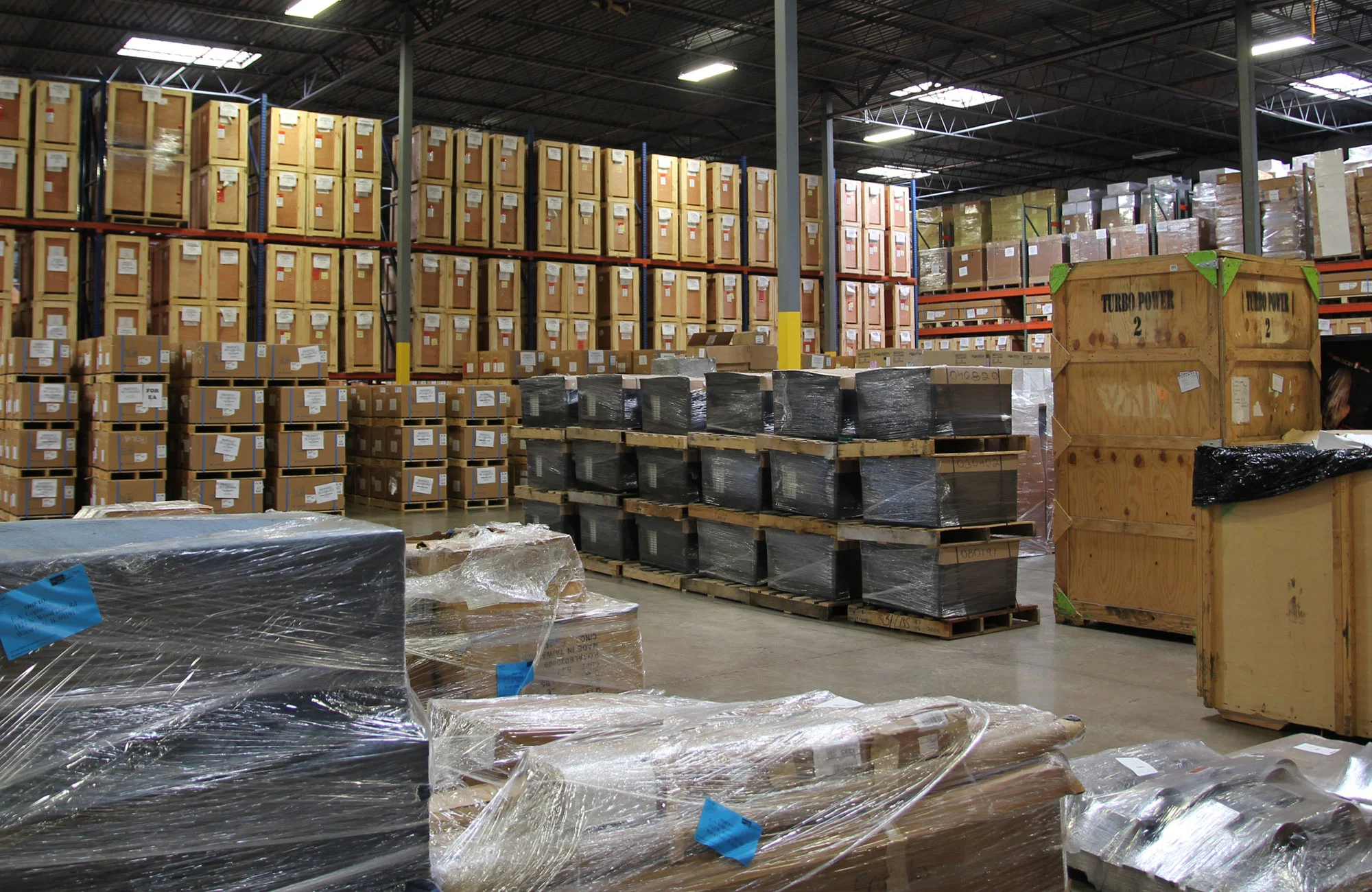
Shipping freight straight to a show site works only when the delivery window lines up precisely with the venue's dock schedule. Advance warehouse coordination gives a program a buffer, receiving freight days or weeks early, holding it securely, and releasing it to the venue dock on a schedule the show actually controls.
Advance Warehouse Coordination execution priorities
- Meeting the show's published advance freight deadline before it passes
- Choosing a warehouse location that shortens the final leg to the venue
- Keeping paperwork, bills of lading, and piece counts accurate through the transfer
Advance freight deadlines are firm for a reason
Most Columbus shows publish an advance freight deadline in the exhibitor manual, after which freight either has to ship direct to show site on a tighter window or risks missing the dock schedule entirely, and that deadline exists because the warehouse and dock crews are staging dozens or hundreds of exhibitors' freight on the same timeline.
Missing that window shifts a program from a controlled advance receipt into a direct-to-show delivery that competes for the same limited dock time as every other exhibitor arriving that week, which is a considerably higher-risk position to be in.
Warehouse location shortens the last mile
A warehouse positioned close to the interstate and the show venue, such as space in Whitehall near I-70 and John Glenn Columbus International Airport, cuts down the final transit leg compared to a facility farther out in the metro, which matters most on the day freight actually needs to move to the dock.
That shorter last leg does not remove the need for a scheduled release time, but it does reduce the number of variables between the warehouse and the venue that could delay the freight once it is finally called forward.
Paperwork accuracy carries through the whole chain
Every transfer, from carrier to warehouse and warehouse to show site, depends on accurate bills of lading and piece counts, since a discrepancy discovered at the venue dock is far harder to resolve than one caught during advance receiving.
Keeping a clear chain of custody through advance warehouse coordination, with piece counts verified at each handoff, is what keeps a claim or a missing crate from turning into a show-day crisis instead of a paperwork correction.
- Confirm the show's advance freight deadline before booking any carrier
- Choose warehouse space positioned close to the interstate and the destination venue
- Verify piece counts and bills of lading at every handoff, including the final one
Advance warehouse coordination as part of the larger freight plan
Advance warehouse coordination works best as one piece of a broader drayage and material-handling plan rather than a standalone service, since the same freight that arrives early still has to move through marshalling, dock scheduling, and floor delivery once the show actually opens its doors.
Treating warehouse receiving as the first step in that larger chain, rather than a separate errand, is what keeps a Columbus program's freight moving on a schedule the show controls instead of one dictated by whichever carrier happens to be running late that week.
Questions about Advance Warehouse Coordination
What happens if freight misses the advance deadline?
It generally has to ship direct to show site instead, competing for the same limited dock time as every other exhibitor delivering that week, which is a higher-risk position than an advance receipt.
Why does warehouse location matter for advance coordination?
A warehouse close to the interstate and the destination venue shortens the final transit leg on the day freight is called forward, reducing the number of variables between the warehouse and the dock.
What paperwork needs to be tracked through advance warehouse coordination?
Bills of lading and piece counts at every handoff, from carrier to warehouse and warehouse to show site, since a discrepancy is much easier to resolve during receiving than after freight reaches the dock.
Is advance warehouse coordination a standalone service?
It works best as part of a larger drayage and material-handling plan, since freight received early still has to move through marshalling and dock scheduling once the show opens.
Does advance warehouse coordination cost more than direct-to-show shipping?
It usually adds a storage and handling fee, but that cost typically offsets the risk of missing a tight direct-to-show dock window, particularly for exhibitors with larger or more complex freight.
Who typically handles freight once it reaches the show venue from the warehouse?
The venue's dock and marshalling crew usually take it from there, moving freight from the receiving dock to the booth location on a schedule coordinated with the general contractor.