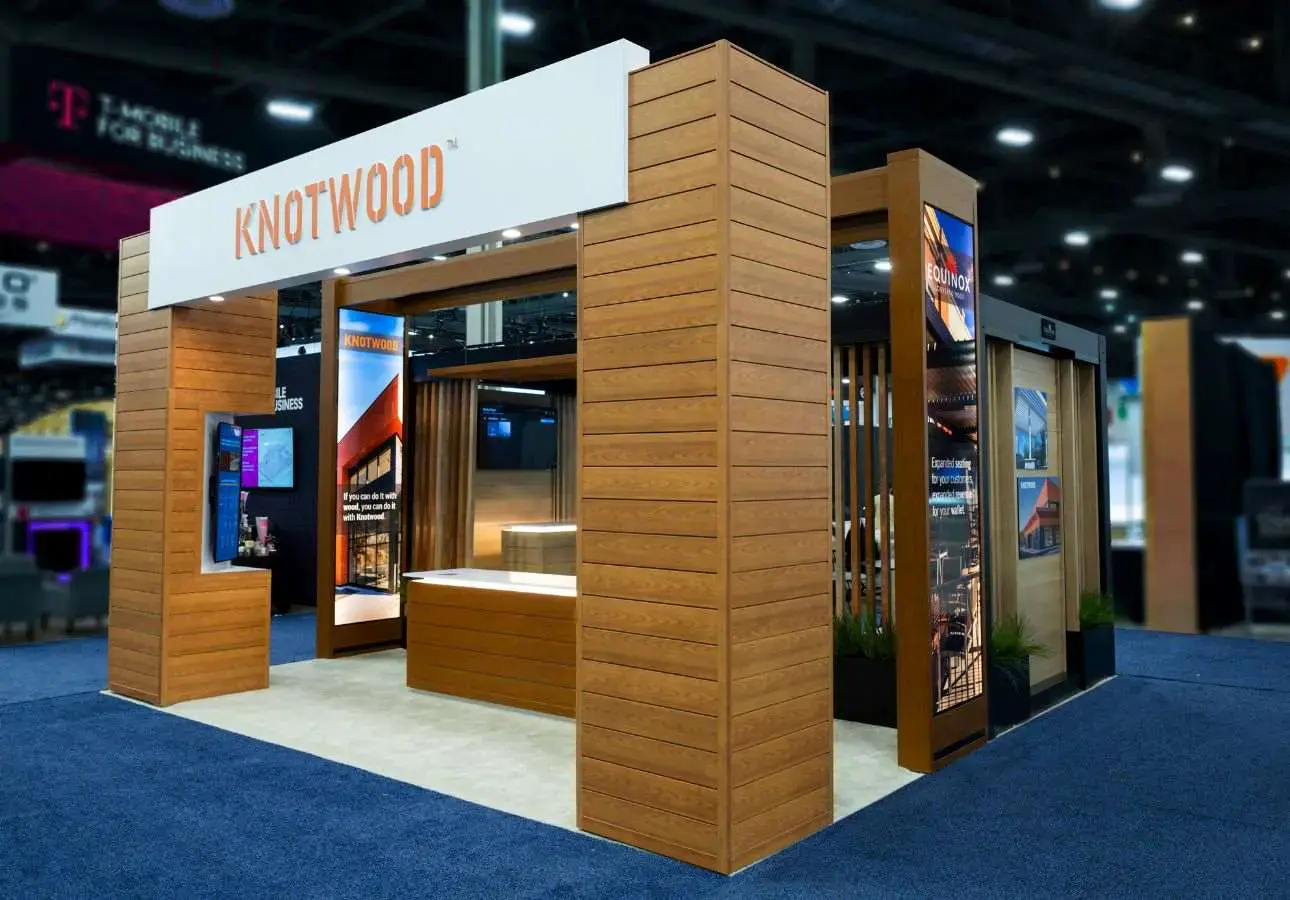
An exhibit property that looked sharp at its first show rarely stays that way after several moves, and a booth that fit last year's inline space does not automatically fit next year's peninsula assignment. Refurbishment and reconfiguration address both problems without starting the build over from scratch.
Booth Refurbishment and Reconfiguration execution priorities
- Assessing structural wear against the booth's next planned use
- Reconfiguring frame and panel components to a new assigned footprint
- Refreshing graphics and finishes without rebuilding the underlying structure
Wear shows up differently across a booth's structure
Frame connectors, casework corners, and high-touch surfaces tend to show wear well before the overall structure is actually compromised, so an honest assessment separates cosmetic damage that graphics or finish work can fix from structural issues that need real repair.
That distinction matters for budgeting: a booth with scuffed laminate and faded graphics is a much smaller project than one with a cracked frame connector or a panel that no longer seats properly, even though both can look similarly tired from a distance.
Reconfiguration follows the next assigned footprint
A booth built as an island for one show and assigned an inline space for the next needs more than a smaller footprint, it typically needs different back-wall treatment, since an island design assumes open access from every side while an inline booth needs a finished back panel facing the aisle behind it.
Planning that reconfiguration around the specific next-show floor plan, rather than a generic downsizing, is what keeps the rebuilt structure looking intentional instead of like a larger booth awkwardly squeezed into a smaller space.
Graphics and finish refresh without a full rebuild
Replacing graphics panels, refinishing counters, or updating lighting can extend a structurally sound booth's usable life by several shows without touching the underlying frame system at all.
This is usually the more cost-effective path when the structure itself remains solid and only the visible surfaces have aged, which is a common outcome for a booth that has been stored and reused correctly between appearances.
- Separate cosmetic wear from structural issues before budgeting the work
- Match reconfiguration to the specific next-show floor plan and booth type
- Refresh graphics and finishes on a sound structure rather than rebuilding it
Keeping refurbished properties ready between shows
Storing a refurbished or reconfigured booth properly, with components labeled and inventoried, is what keeps the next round of work from starting with a search for missing pieces instead of an actual refresh.
Handled that way, booth refurbishment and reconfiguration becomes a routine part of a show calendar rather than an emergency project taken on only after a structure has become visibly unusable.
Scheduling that work between shows, rather than in the days right before the next move-in, also gives a graphics printer or a repair shop enough lead time to do the work properly instead of rushing a fix that might not hold up through a full multi-day show.
Questions about Booth Refurbishment and Reconfiguration
How do I know if a booth needs refurbishment or a full rebuild?
It depends on whether the wear is cosmetic or structural. Faded graphics and scuffed surfaces usually call for refurbishment, while a cracked frame connector or a panel that no longer seats properly points toward more significant repair.
Can an island booth be reconfigured into an inline booth?
Yes, but it usually needs more than resizing. An inline booth needs a finished back-wall panel that an island design, built for open access on every side, would not include.
Does reconfiguration require rebuilding the frame system?
Not always. If the underlying structure is sound, reconfiguration can often be done by rearranging existing components and adjusting graphics rather than building new frame components.
How should a booth be stored between refurbishments?
With components labeled and inventoried, so the next reconfiguration or refresh starts with a known set of parts instead of a search for pieces that were not tracked after the last show.
When is the best time to schedule refurbishment work?
Between shows rather than in the final days before the next move-in, since that gives a graphics printer or repair shop enough lead time to do the work properly instead of rushing a fix under deadline pressure.
Is it worth refurbishing an exhibit property that has been used for many shows?
Usually yes, as long as the underlying frame system is still structurally sound, since refurbishing a proven structure is typically more cost-effective than designing and building a replacement from scratch.