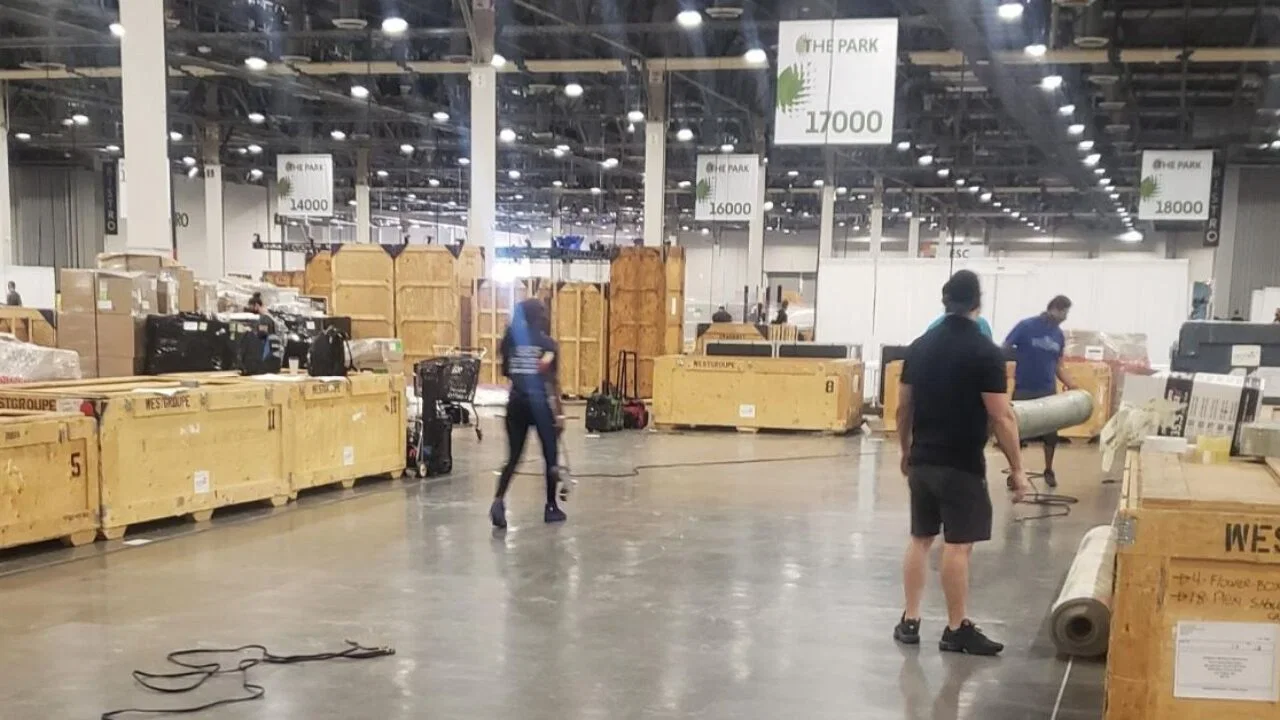
This page covers the scheduling and condition-tracking questions that matter most for exhibit storage and asset management across repeat Columbus bookings.
Exhibit Storage and Asset Management execution priorities
- Storage cycles planned around the show calendar rather than a fixed annual schedule
- Asset condition documented at each pull and return to catch damage before the next show
- Exhibit storage and asset management coordinated with whichever dock or drive-in access the next venue requires
Reading the local show calendar
Downtown Columbus conventions at the Greater Columbus Convention Center and fairgrounds expos at the Ohio Expo Center do not run on identical calendars, so an exhibit asset used at one may sit in storage for a different length of time before its next booking than a piece cycling through a single annual show.
Exhibit storage and asset management should track each asset against its actual next-booking date rather than assuming a fixed storage-to-show interval that may not match the real calendar.
Condition tracking between pulls
Every time an asset is pulled from storage for a show and returned afterward, its condition should be documented, since damage from a rough drayage handoff or a tight fairgrounds drive-in door is easier to trace immediately than months later.
This is especially relevant when the same asset moves between a GCCC dock delivery one show and an Ohio Expo Center drive-in the next, since the two access methods put different stress on crates and finishes.
- Photograph and log condition at pull and at return for every cycle
- Flag any damage before the asset goes back into storage, not after the next show reveals it
- Track which access method, dock or drive-in, the asset most recently went through
Storage location and transport distance
Where the asset is stored relative to downtown Columbus versus the fairgrounds corridor on the north side affects transport time and cost for each show cycle, so exhibit storage and asset management should weigh storage location against which venues the asset is booked into most often.
A storage plan sized only for downtown bookings may add unnecessary transport time if the asset ends up booked into an Ohio Expo Center show more often than expected.
Coordinating with move-in access rules
Because GCCC identifies itself as a non-union, right-to-work building with published self-handled allowances, some pull-and-deliver tasks for stored assets can be handled without full venue labor, which is worth confirming before each show if it affects the transport plan.
Exhibit storage and asset management should confirm that allowance for the specific booking rather than assuming it carries over unchanged from a prior show at a different venue.
Distance from downtown and the fairgrounds corridor
A storage facility positioned between downtown Columbus and the fairgrounds corridor on the north side near the Ohio Expo Center keeps transport times reasonable regardless of which venue the next show lands in.
Exhibit storage and asset management plans that assume every show will be downtown can end up with longer, costlier transport legs the first time an asset is booked into a fairgrounds show instead, so location should be chosen with both venue types in mind.
A written note in the asset log about which corridor, downtown or fairgrounds, each piece was most recently used in can make future exhibit storage and asset management transport decisions faster, since the pattern of use over several shows is often a better guide than a single booking.
Questions about Exhibit Storage and Asset Management
Does the Columbus show calendar affect storage cycles?
Yes, downtown GCCC conventions and Ohio Expo Center fairgrounds expos run on different calendars, so exhibit storage and asset management should track each asset against its actual next-booking date rather than a fixed interval.
Why does condition tracking matter between shows?
Damage from a dock handoff or a tight fairgrounds drive-in door is easier to trace immediately after a pull or return than months later, so photographing and logging condition at each cycle catches problems early.
Does storage location matter for transport cost?
Yes, storage location relative to downtown versus the fairgrounds corridor on the north side affects transport time for each cycle, so it should be weighed against which venues the asset is booked into most often.
Can pull-and-deliver tasks be self-handled at GCCC?
GCCC publishes self-handled allowances as a non-union, right-to-work building, but the allowance should be confirmed for the specific booking rather than assumed to carry over from a prior show.
Where should storage be located relative to Columbus venues?
A facility positioned between downtown and the fairgrounds corridor on the north side keeps transport reasonable whether the next booking lands at GCCC or an Ohio Expo Center show.