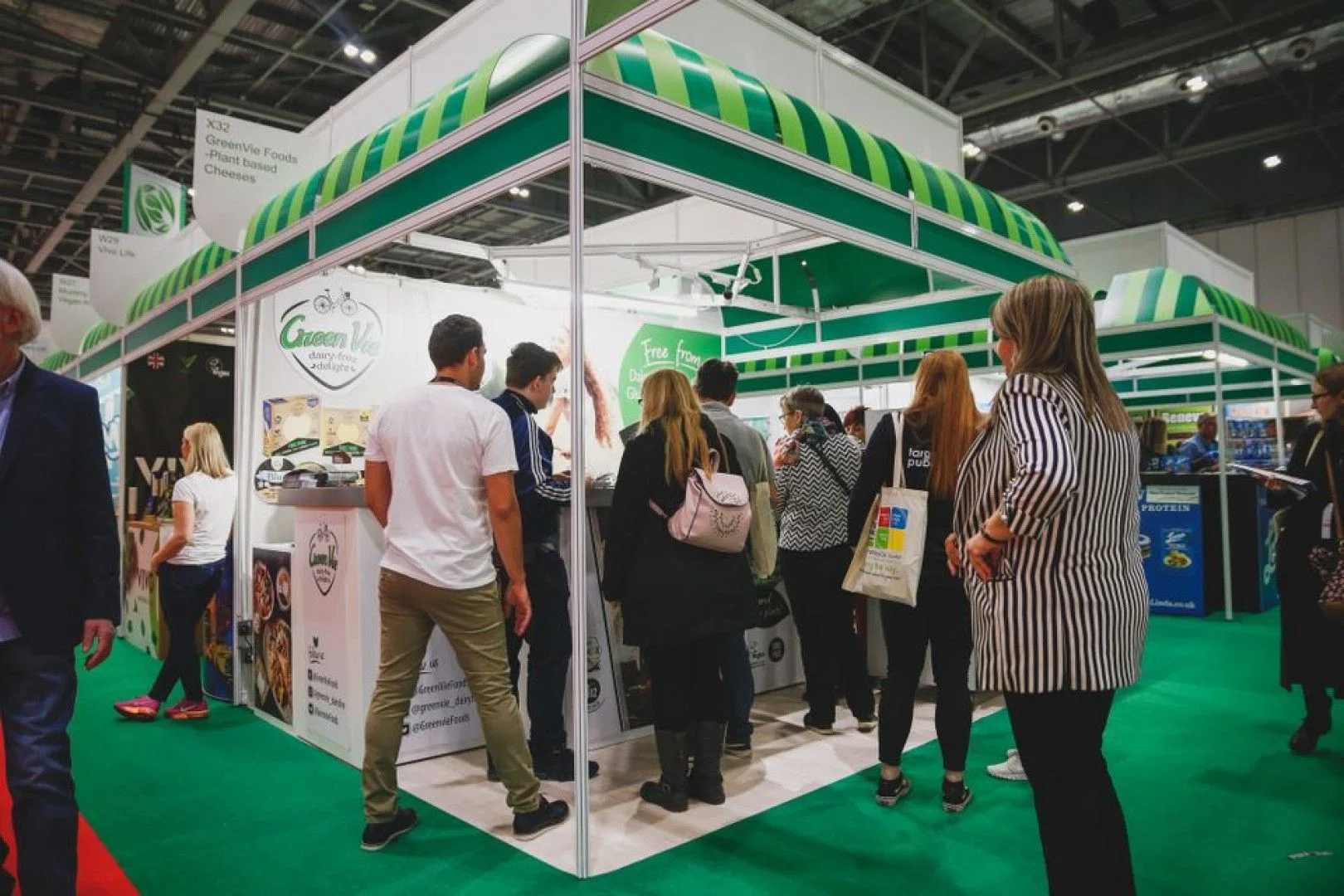
Registration and arrival environments carry more weight than their footprint suggests, since a slow or confusing entry sequence colors how attendees judge the rest of the show.
Columbus programs that move between a downtown concourse and a fairgrounds gate over a calendar year need two separate arrival plans, not one plan stretched to fit both.
Registration and Arrival Environments execution priorities
- Whether check-in happens on a finished indoor concourse or at an outdoor fairgrounds gate
- How badge printing and queuing space is positioned relative to the connected hotel walkway downtown
- Weather contingency for any outdoor arrival point at the Ohio Expo Center
Downtown concourse check-in
Inside the Greater Columbus Convention Center, registration typically sits in a finished concourse area with climate control already handled, which lets the arrival design focus on queue length, badge station count, and signage rather than weather protection.
Because the center connects to the Hilton Columbus Downtown and the Hyatt Regency Columbus by covered walkway, some registration and arrival environments are built to intercept attendees staying at either hotel before they even reach the main concourse, which can shorten the visible queue at the primary entrance.
A program that also books a Franklin Park Conservatory evening event should plan a completely separate arrival sequence for that stop, since the conservatory's own entrance, parking, and indoor garden layout have nothing in common with either the convention center concourse or an Ohio Expo Center gate.
Fairgrounds gate arrival at the Ohio Expo Center
An Ohio Expo Center program often routes attendees through an outdoor or semi-covered gate before they reach an interior building like the Bricker Building or Cardinal Hall, which means the arrival environment has to plan for weather exposure and outdoor queuing in a way a downtown concourse never does.
Parking distance also plays a bigger role at the fairgrounds campus, since surface lots there are typically farther from the gate than a downtown parking structure is from the convention center's concourse doors.
- Plan covered queuing where possible at any outdoor fairgrounds gate
- Position badge stations to intercept both parking-lot and walkway arrivals separately
- Confirm ADA-accessible paths from the farthest parking point to the check-in point
Badge design and station count against real queue math
Registration and arrival environments should be sized against expected arrival rate in a compressed window, since most attendees show up in the first hour after doors open rather than spread evenly across the morning.
A downtown program with hotel-walkway intercept points can spread that arrival curve out somewhat, while a single-gate fairgrounds arrival tends to concentrate it, which argues for more badge stations relative to total headcount at the Ohio Expo Center than downtown.
Signage that works for first-time Columbus attendees
A downtown attendee who has never visited the Greater Columbus Convention Center may not know the walkway connections to the Hilton and Hyatt exist, so directional signage at those hotel exits matters as much as signage inside the concourse itself.
At the fairgrounds, first-time attendees are navigating a large, spread-out campus rather than a single building, so wayfinding from the gate to the specific building and hall becomes its own registration and arrival problem separate from the check-in process itself.
Questions about Registration and Arrival Environments
Is registration handled the same way downtown and at the fairgrounds?
No. A downtown concourse check-in benefits from climate control and hotel walkway intercepts, while an Ohio Expo Center gate has to plan for outdoor queuing and longer parking distances.
Can attendees check in from a connected hotel before reaching the convention center?
The Hilton Columbus Downtown and the Hyatt Regency Columbus connect by covered walkway, which some programs use to intercept hotel-staying attendees before the main concourse queue.
Why does the fairgrounds need more badge stations relative to headcount?
A single-gate arrival tends to concentrate attendees in a shorter window than a downtown program with multiple hotel-walkway intercept points.
What should outdoor fairgrounds check-in plan for that downtown does not?
Weather exposure and covered queuing, since downtown concourse registration is already indoors and climate controlled.
Does wayfinding matter more at one site than the other?
At the Ohio Expo Center it has to guide attendees across a large, spread-out campus to the correct building, which is a different problem than wayfinding inside a single downtown concourse.
Does an off-site reception need its own arrival plan?
Yes, a stop at a venue like the Franklin Park Conservatory needs its own entrance, parking, and check-in plan built from scratch rather than reused from the main convention center or fairgrounds arrival sequence.