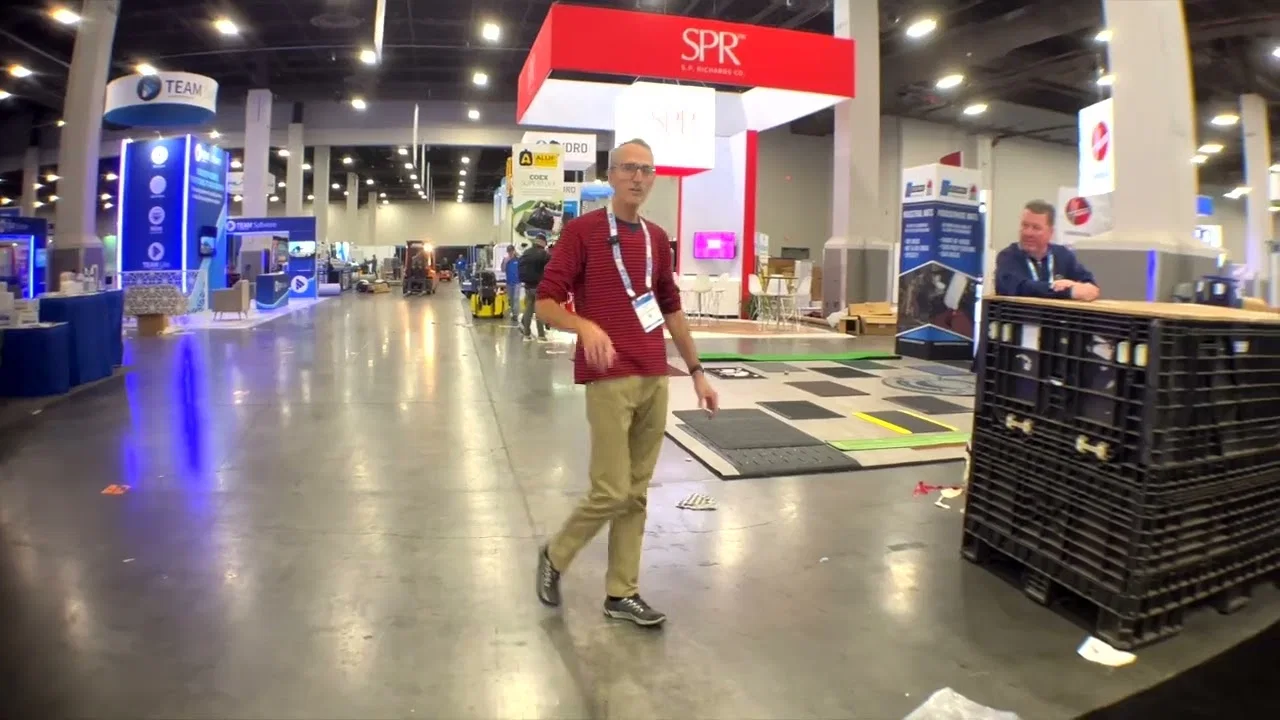
A supervisor's job on-site is to catch the gap between what was planned and what the venue is actually doing that day, which requires knowing each Columbus property's own rhythm rather than applying one generic checklist everywhere.
That gap shows up differently downtown than it does at the Ohio Expo Center, so show-site supervision has to flex with the building.
Show-Site Supervision execution priorities
- Whether move-in is happening at a shared downtown dock or a fairgrounds drive-in door on a given day
- Which exhibitors are working under a self-handled allowance versus contracted labor
- Whether hospitality or breakout activity is happening in a connected hotel across the skywalk
Supervising across a connected downtown footprint
When a program spans the Greater Columbus Convention Center's exhibit floor, Battelle Grand for general sessions, and a hospitality space in the Hilton Columbus Downtown or Hyatt Regency Columbus, supervision means physically walking between buildings on a schedule rather than assuming radio contact alone will catch a scheduling conflict.
The covered walkway connections make that physically possible without going outside, but a supervisor still has to build the walking time into the actual site schedule rather than treating it as instant.
A supervisor working a program that also includes an evening reception at the Franklin Park Conservatory or COSI should treat that stop as a separate site visit late in the day, confirming setup and guest flow there rather than assuming the main show-site team can cover it remotely.
Supervising self-handled exhibitors under Columbus's labor rules
Because the Greater Columbus Convention Center publishes itself as a non-union, right-to-work building with documented self-handled allowances, show-site supervision at that venue often includes tracking which exhibitors are moving their own freight and which are using contracted labor, since the two groups can occupy the same dock queue at different paces.
A supervisor who assumes every exhibitor is on the same labor track risks a bottleneck at the dock that neither group expected.
- Track which booths are self-handling versus using contracted labor at the dock
- Confirm current exhibitor manual rules rather than a prior show's rules
- Flag dock queue bottlenecks early rather than after move-in is already behind
Supervision at Ohio Expo Center buildings
At the fairgrounds, a program spread across buildings like the Bricker Building and Cardinal Hall means supervision covers more physical distance and more separate drive-in points than a single downtown hall, and the calendar itself matters more because the Ohio State Fair occupies the campus for weeks each summer.
A supervisor working an Ohio Expo Center date should confirm which buildings are actually available that week rather than assuming the full campus is open.
What a daily supervision walk should actually check
A useful daily walk covers dock or drive-in status, aisle and fire-lane clearance, signage accuracy, and whether any hospitality or breakout space across a walkway or parking lot is running on the schedule it was given, since small drifts compound over a multi-day show.
Documenting what changed each day, rather than only what went wrong, makes the next Columbus date on the calendar easier to plan.
A supervisor moving between the exhibit floor, Battelle Grand, and a connected hotel space should also keep a short written log of arrival and departure times at each stop, since that record becomes useful later if a vendor disputes when a particular issue was first flagged on site.
Questions about Show-Site Supervision
Does show-site supervision cover more than one building in Columbus?
Often yes, since a program can span the convention center floor, Battelle Grand, and a connected hotel across the skywalk, all needing separate attention on the same day.
Why does self-handling matter for supervision at the convention center?
Because the venue documents self-handled allowances for exhibitors, supervision has to track which booths are self-handling and which are using contracted labor to avoid dock bottlenecks.
What changes about supervision at Ohio Expo Center dates?
More physical distance between buildings and a tighter calendar window because of the annual Ohio State Fair, which occupies the campus for weeks each summer.
What should a daily supervision walk include?
Dock or drive-in status, aisle and fire-lane clearance, signage accuracy, and whether connected hospitality spaces are on schedule.
Is one supervision checklist enough for every Columbus venue?
No, the checklist should flex based on whether the date is downtown, at a connected hotel, or at the Ohio Expo Center.
Does show-site supervision extend to an off-site evening reception?
It should, since a stop at a venue like the Franklin Park Conservatory or COSI needs its own setup and guest-flow check rather than being covered remotely by the team supervising the main show floor.