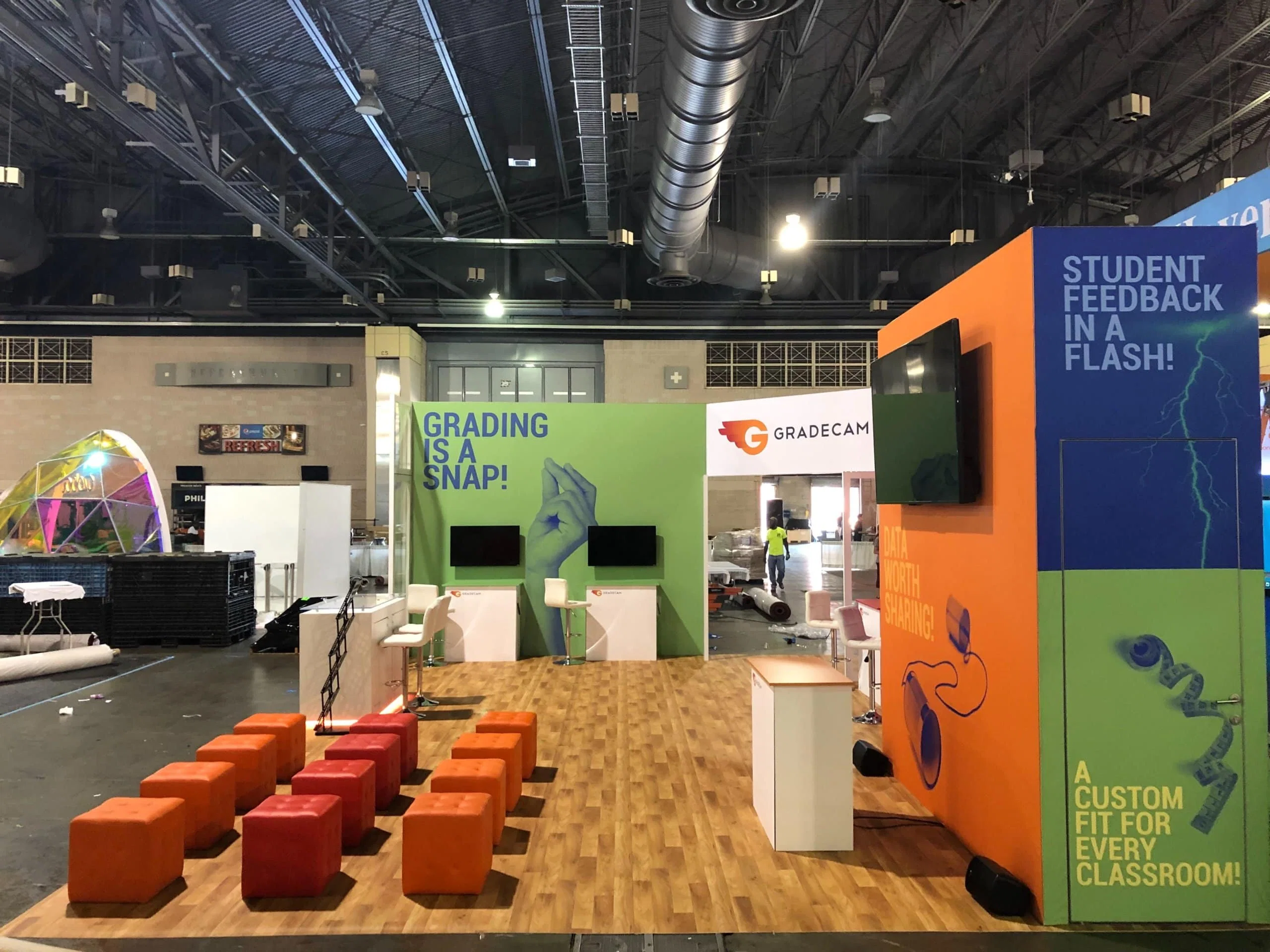
A modular system built on a common frame, connector, and panel format can be rebuilt into several different shapes and sizes, which is useful for a company whose booth footprint changes from show to show rather than staying fixed year over year.
That flexibility is the main reason exhibitors choose modular over a fixed custom build in the first place: the same investment in frames and connectors keeps paying off across a multi-show schedule instead of being written off after a single appearance in one footprint.
Modular Display Rentals execution priorities
- Choosing a frame and connector system that supports the range of footprints actually needed
- Planning graphics that adapt across reconfigured layouts
- Tracking components between shows so nothing goes missing between rebuilds
Flexibility comes from the frame system, not the graphics
The real value of a modular display is in its underlying frame and connector system, which determines how many different configurations, inline, peninsula, or larger island layouts, the same components can realistically support.
A system chosen only for its current show's footprint can end up limiting future options, so it is worth confirming upfront whether the frame system can scale up or down to the range of booth sizes the exhibitor expects to use across a multi-show schedule.
Graphics need to adapt with the structure
Graphics designed for one specific modular configuration do not always transfer cleanly to a different layout, since panel counts, heights, and sightlines change between an inline and an island footprint.
Planning graphics with some flexibility built in, rather than a single fixed design, keeps a reconfigured modular display from looking stretched, cropped, or mismatched when it is rebuilt into a different shape for the next show.
Component tracking matters more with reuse
Because a modular system is meant to be broken down, stored, and rebuilt repeatedly, keeping an accurate inventory of frames, connectors, panels, and hardware between shows is what keeps the system usable long term.
A missing connector or panel discovered during move-in is a more disruptive problem than the same gap found during a pre-show inventory check, so tracking components between events is worth the extra step.
- Confirm the frame system supports the full range of footprints needed
- Design graphics with enough flexibility to work across configurations
- Inventory components after every show as well as before the next one
Getting the most out of a modular rental system
A modular display rental works best as a long-term asset rather than a one-time order, since its advantage is the ability to reshape the same core components for whatever footprint the next show assigns.
Treating it that way, with graphics and component tracking planned in from the start, keeps a modular system genuinely reusable instead of turning into a one-off structure that only fits the first show it was built for.
Working with a crew that already knows the specific frame system also shortens each rebuild, since a team familiar with a given connector type and panel format can reconfigure it faster and with fewer assembly errors than a crew encountering the system for the first time on a tight move-in schedule.
Questions about Modular Display Rentals
What makes a modular display different from a standard rental exhibit?
A modular system uses a shared frame and connector format that can be reconfigured into different booth footprints, while a standard rental is typically built for one specific configuration.
Do graphics need to be redesigned for every modular configuration?
Not always, but graphics designed with flexibility in mind hold up better across configurations than a single fixed design, since panel counts and sightlines change between layouts.
How should components be tracked between shows?
With a post-show inventory check rather than waiting until the next move-in, since a missing frame, connector, or panel is far more disruptive to discover during setup.
Is a modular display worth it for a company running only one show a year?
It can still be worthwhile if the footprint might change over time, but the bigger advantage shows up for exhibitors running multiple shows with varying booth sizes.
Does using the same crew across shows help with a modular system?
Yes, generally. A crew already familiar with a specific frame and connector system can reconfigure it faster and with fewer errors than a crew seeing that particular system for the first time on-site.
How often should a modular display's hardware be inspected?
At each teardown and rebuild is a reasonable minimum, checking connectors, panel edges, and fasteners for wear so a small issue gets caught before it turns into a failed component during a future show's setup.