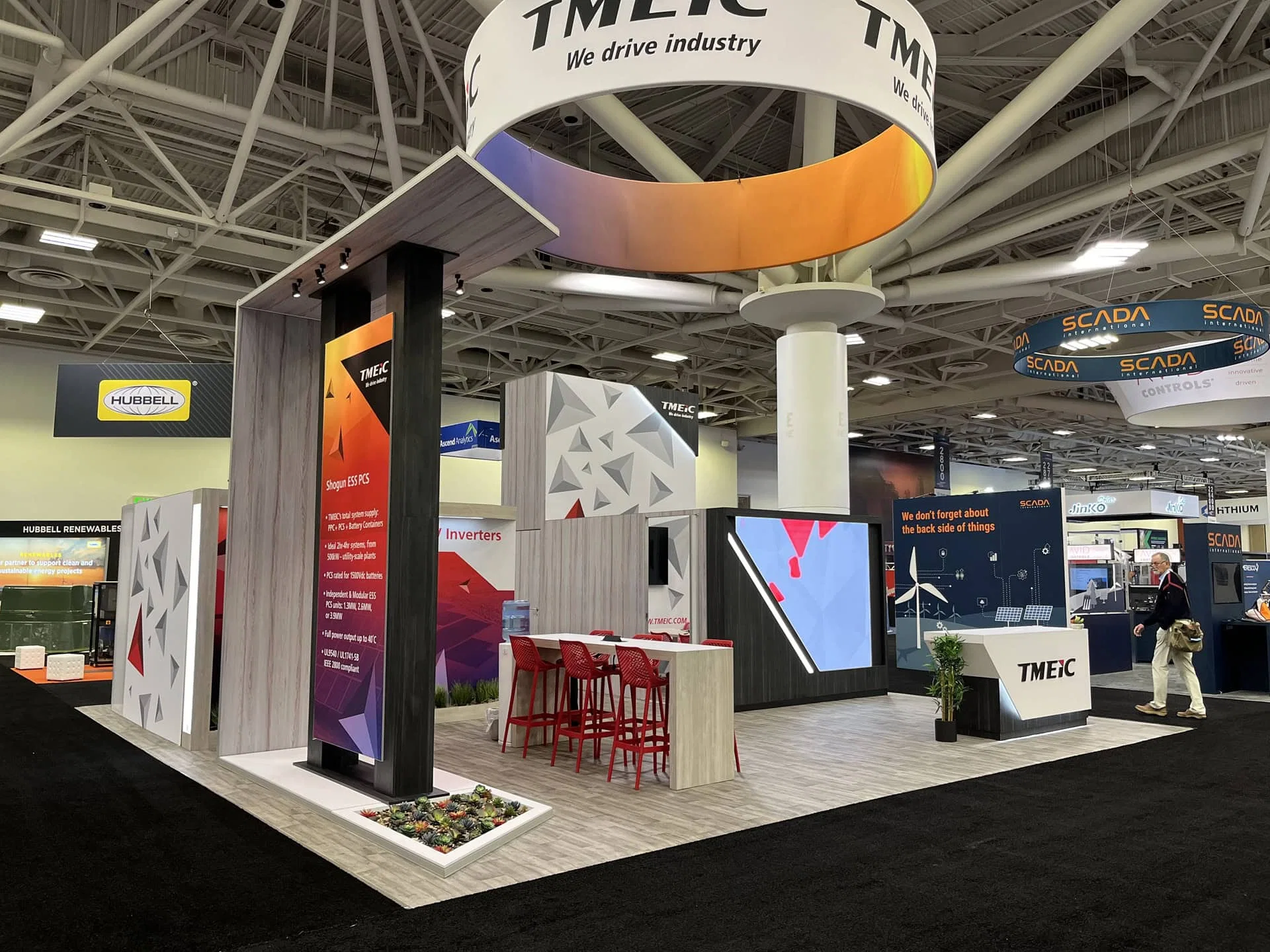
Exhibitors who return to Columbus more than once a year, or who use the same structure across several Ohio cities, tend to favor a modular trade show booth precisely because it can be resized between an inline row, a peninsula, and a small island without a full rebuild.
The planning notes below focus on what changes for a modular system specifically in this market.
Modular Trade Show Booths execution priorities
- Design the modular trade show booth's largest configuration around the tightest hall it will ever occupy
- Confirm crate sizing against dock doors downtown and drive-in doors at the expo campus
- Keep a record of which components are used for which configuration to speed up on-site build decisions
- Check reconfiguration time against the specific show's move-in window before committing to a layout change
Designing for the tightest hall first
Because a modular trade show booth is meant to flex between shows, the safest approach is to design its tallest and widest configuration around the most restrictive hall it is likely to occupy rather than the most generous one, so it never needs a redesign to fit a smaller Greater Columbus Convention Center hall or a lower-clearance room elsewhere.
That upfront discipline saves the cost of a field modification later, which is the more common failure mode for a modular trade show booth than the structure itself.
Crate sizing across downtown and expo-campus loading
The Greater Columbus Convention Center loads freight through a dock system sized for standard truck heights, while the Ohio Expo Center and State Fairgrounds relies more on drive-in doors in buildings like the Bricker Building and Celeste Center, and a modular trade show booth's crates need to clear both without modification.
Confirming crate dimensions against both loading styles before the first show, rather than after a crate does not fit through a doorway, keeps the whole modular system moving on schedule.
- Greater Columbus Convention Center: dock-fed freight, standard truck-height clearance
- Ohio Expo Center and State Fairgrounds: drive-in doors, wider staging lanes
- Sonesta Columbus Downtown and other nearby hotels: smaller meeting-space loading for satellite functions
Reconfiguration time and the move-in clock
A modular trade show booth's main advantage is speed, but that advantage only holds if the crew building it knows exactly which panels and connectors belong to which configuration, since sorting components on-site during a compressed move-in window erases the time savings.
Building a simple configuration map for the modular trade show booth ahead of the show, rather than relying on memory from the last event, keeps changeovers fast even when the move-in slot is short.
- Keep a configuration map for each layout the modular system supports
- Confirm the move-in window length before deciding whether to reconfigure on-site
- Label components clearly so the build crew isn't sorting parts under time pressure
Labor considerations for a modular build
Even though a modular trade show booth is designed for a fast build, the labor rules still follow the venue rather than the booth type, so a reconfiguration involving overhead components or electrical still typically needs the general service contractor regardless of how simple the modular system is to assemble.
Confirming that split before assuming a modular trade show booth's speed also means less labor is what keeps the on-site budget from running over the estimate.
Questions about Modular Trade Show Booths
Can a modular trade show booth be reconfigured between a downtown show and an Ohio Expo Center show?
Yes, that flexibility is the main reason exhibitors choose a modular trade show booth, but crate sizing should be checked against both the convention center's dock system and the expo campus's drive-in doors before the first use.
How much does hall size vary for modular trade show booths in Columbus?
Ceiling height and column spacing differ by hall at the Greater Columbus Convention Center and by building at the Ohio Expo Center, so a modular trade show booth's tallest configuration should be designed around the most restrictive space it will occupy.
Does reconfiguring a modular trade show booth take longer than building from scratch?
It should not, provided the crew has a clear configuration map, but sorting unlabeled components during a short move-in window can erase the time advantage a modular trade show booth is supposed to offer.
Is modular construction treated differently under Columbus labor rules?
The labor rules follow the venue rather than the booth type, so a modular trade show booth still needs its self-handled versus general-service-contractor split confirmed against the specific venue's exhibitor manual.