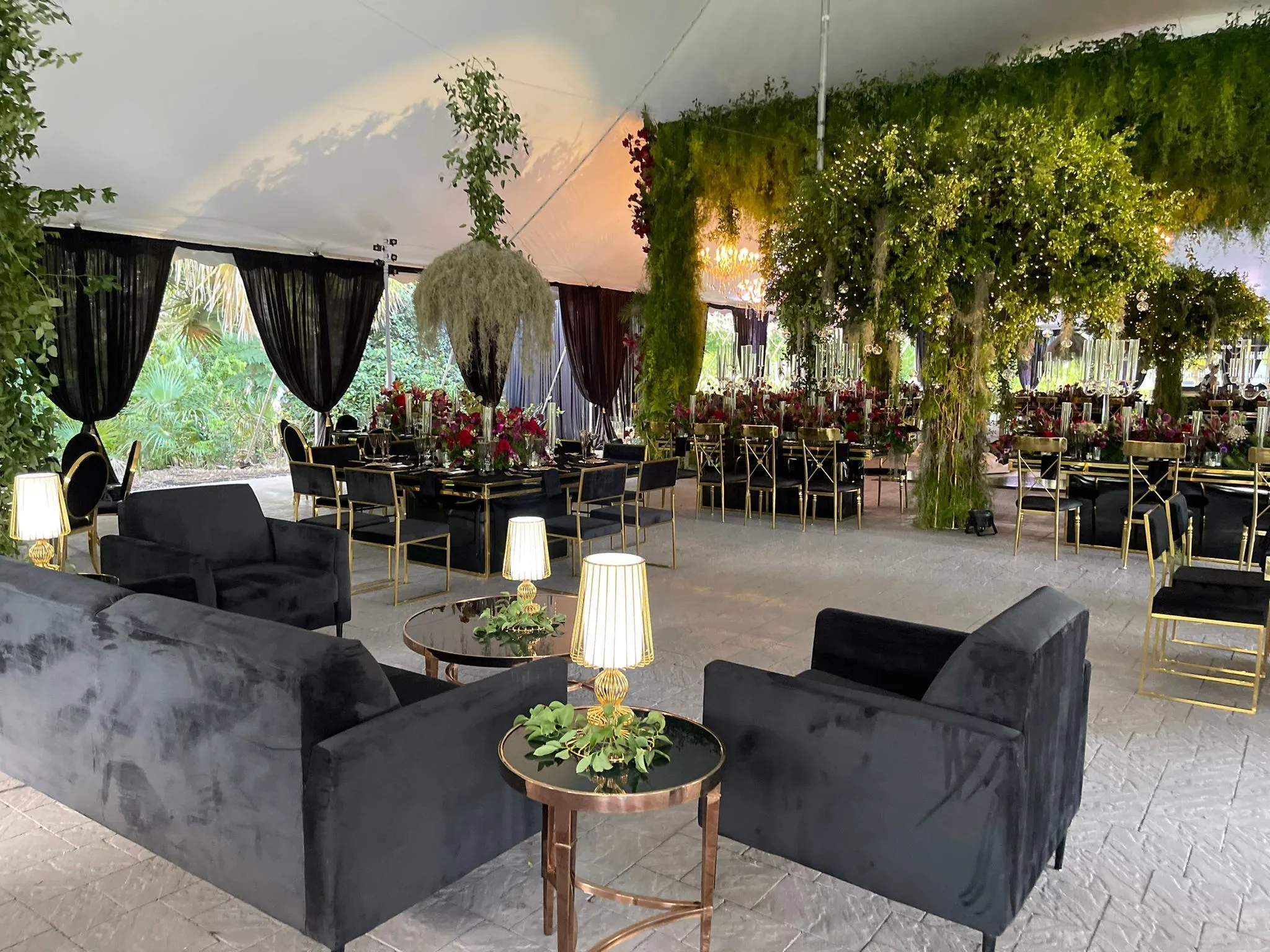
Seating, tables, and soft-lounge pieces do more than fill space; they signal whether a booth or event area is meant for a quick conversation, a longer sit-down meeting, or a casual networking moment, and each of those calls for different furniture choices.
Furniture and Lounge Rentals for Events execution priorities
- Choosing pieces that match how attendees are meant to use the space
- Meeting fire-code and flame-retardant requirements for public event spaces
- Fitting furniture delivery and placement into the venue's load-in schedule
Furniture choice signals how a space should be used
A cluster of low lounge seating and a coffee table invites a longer, informal conversation, while a standing-height counter with stools moves people through faster, and a booth or lounge area works best when the furniture matches the actual traffic pattern it needs to support.
On a busy convention floor, that often means favoring durable, easy-to-clean pieces that hold up to heavy daily use, while a hotel-ballroom reception can lean toward softer, more residential-feeling furniture since the room is used for a shorter, more controlled event.
Public event furniture has to meet fire-code standards
Furniture used in convention centers, hotel ballrooms, and other public event spaces generally has to meet flame-retardant and fire-code requirements that ordinary retail or residential furniture does not, so rental furniture sourced for events is typically certified for that use rather than substituted from a general inventory.
Confirming that certification ahead of time avoids a last-minute rejection at load-in, which is a far more disruptive problem to solve on-site than during the ordering process.
Delivery and placement follow the venue's schedule
Furniture delivery for a booth or lounge area needs to land inside the same load-in window as everything else moving into the venue, and placement typically has to wait until carpet or flooring is down, which means furniture is usually one of the later items in the install sequence rather than one of the first.
Coordinating that timing with whoever is managing the overall install keeps furniture crews from arriving before the space is ready, or from being rushed into placement right before doors open.
- Choose seating and table height based on the intended use of the space
- Confirm flame-retardant or fire-code certification for all rented furniture
- Schedule furniture delivery after flooring or carpet, not before
Planning furniture and lounge rentals as part of the build
Furniture works best when it is planned alongside the booth or event layout rather than added at the end, since seating placement affects sightlines to signage, AV, and staffed areas.
Treating furniture as part of the same design conversation as the rest of the space, rather than a separate rental order, keeps the finished layout feeling intentional instead of assembled piece by piece.
It also helps to think about maintenance during the event itself, since a lounge area that sees heavy use over a multi-day show may need a mid-event check for wear or spills, particularly on lighter-colored upholstery that shows marks more visibly than darker finishes.
Questions about Furniture and Lounge Rentals for Events
How should furniture differ between a booth and a reception?
A booth on a busy show floor generally benefits from durable, easy-to-clean pieces suited to heavy daily traffic, while a hotel-ballroom reception can use softer, more residential furniture for a shorter, more controlled event.
Does event furniture need special fire-code certification?
Yes, generally. Furniture used in convention centers and other public event spaces typically needs to meet flame-retardant standards that ordinary retail furniture does not, so certification should be confirmed before ordering.
When does furniture usually get placed during load-in?
Usually after flooring or carpet is down, which places furniture later in the install sequence rather than at the start, so its delivery should be scheduled accordingly.
Should furniture be selected before or after the booth layout is finalized?
Alongside it, ideally. Seating and table placement affect sightlines to signage and staffed areas, so furniture works best as part of the same design conversation as the rest of the layout.
Does furniture need to be checked during a multi-day show?
It is worth it for heavily used lounge areas. A mid-event check for wear or spills, especially on lighter-colored upholstery, keeps the space looking presentable through the final day rather than only the first.
Who typically coordinates furniture delivery timing with the venue?
Usually whoever is managing the overall booth or event install, since furniture crews need to know exactly when flooring will be finished before they can be scheduled to arrive and place pieces.